



Osamu Tezuka: The God of Manga and Architect of Modern Anime
Osamu Tezuka (1928–1989) is universally recognized in art history as Manga no Kamisama (The God of Manga). His work not only laid the structural foundations of the Japanese comic industry following World War II, but also established the visual grammar, character design principles, and cinematic dynamics that defined modern anime on a global scale.
In this installment of our Legendary Creators section, we analyze the life, scientific background, expressive revolution, and design keys that turned characters like Astro Boy (Tetsuwan Atom) and Kimba the White Lion into immortal icons of global cultural heritage.
1. Biography and Background: Science at the Service of Fantasy
Born in Toyonaka (Osaka) in 1928, Tezuka’s life was shaped by a deeply multidisciplinary curiosity. His passion for entomology (the study of insects, from which he took the kanji for his pen name), classical music, and Western cinema formed the bedrock of his artistic vision:
- Medical Training: Tezuka graduated with a degree in Medicine from Osaka University and earned his doctorate in 1961. Although he never practiced medicine full-time, his profound understanding of human anatomy, biology, and pathology was crucial in lending realism and precision to masterpieces like Black Jack.
- The Influence of Silent Film and Walt Disney: During his childhood and youth, Tezuka was fascinated by American animation—especially Walt Disney’s Mickey Mouse and the productions of the Fleischer brothers. He incorporated dynamic cinematic storytelling and camera framing into the static pages of print.
- The Revolution of Shin Takarajima (1947): With the publication of New Treasure Island (alongside writer Shichima Sakai), Tezuka sold over 400,000 copies and revolutionized manga forever by introducing motion lines, medium shots, dramatic close-ups, and cinematic high-angle framing.
2. Key Principles of Osamu Tezuka’s Character Design
Tezuka democratized a highly intuitive visual design system rich in narrative symbolism. His principles remain essential study for any aspiring illustrator or animator:
A. Large Eyes and Emotional Expressiveness
Inspired by the theatricality of Takarazuka Revue performers and the oversized eyes of Disney characters, Tezuka expanded the proportion of his characters’ eyes. This technical choice allowed him to use pupils and light reflections as the primary window into a character’s emotional state, innocence, and inner psychology—becoming a defining hallmark of global manga style.
B. The “Star System” Principle
Treating his creations like a Hollywood theater troupe, Tezuka created a fixed repertoire of facial and body designs that he reused across different works in various roles. A single character (such as the famous Shunsaku Ban, or “Higeoyaji”) could play a detective in one story, a schoolteacher in another, or a scientist in a third. This taught the industry to prioritize a recognizable silhouette over context.
C. Anatomical Synthesis and Iconic Silhouettes
Despite his medical background, Tezuka streamlined anatomy into fluid geometric shapes to facilitate the mass animation process at his studio, Mushi Production. His characters’ limbs move with extreme flexibility, ensuring the design maintains its visual punch in both comedic and dramatic scenes.
3. Gallery of Icons: Characters That Changed History
Astro Boy (Tetsuwan Atom)
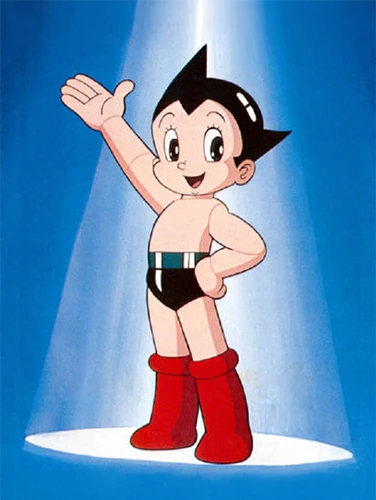
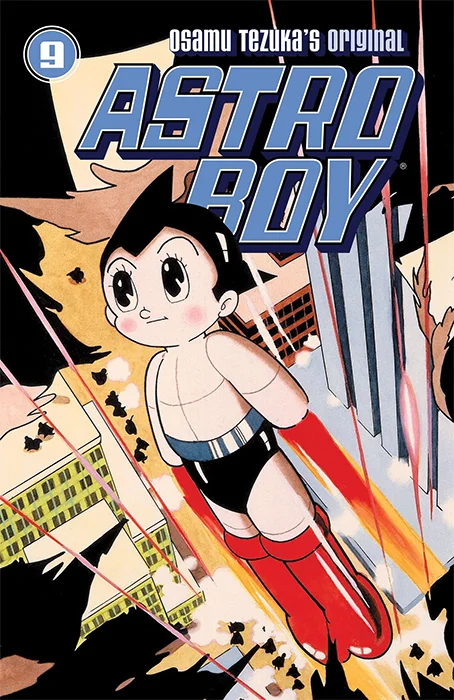
The robot boy with a human heart. Designed with a clean silhouette, red boots, and his signature twin hair spikes mimicking youthful horns. He represents the ethical dilemma between advanced technology and empathy, serving as the ultimate symbol of postwar Japan’s technological innovation and rebirth.
Kimba the White Lion (Jungle Taitei)
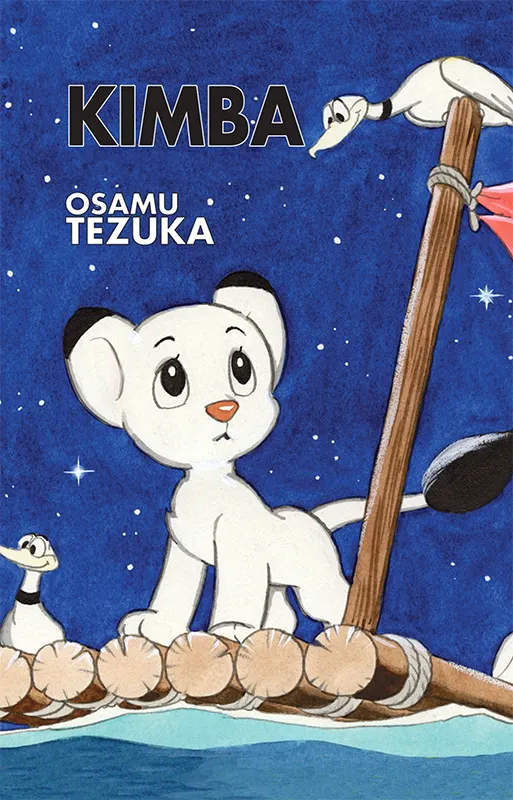
The first animal hero in Japanese animation to undergo a coming-of-age journey. Designed in striking contrast to lush jungle backgrounds through his pristine white fur and large, black-tipped ears, he embodies pacifist leadership, harmony with nature, and personal growth.
Black Jack (Kuroo Hazama)
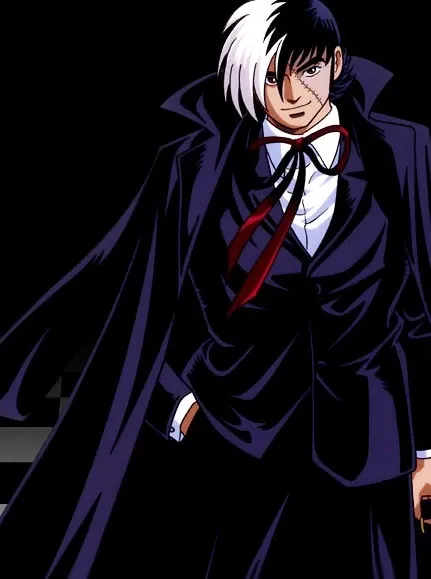
The rogue surgeon. His design reflects his moral duality through a dividing facial scar, two-toned skin, black-and-white hair, and a dark cape. He stands as the archetype of the ethical antihero who defies bureaucracy to save lives.
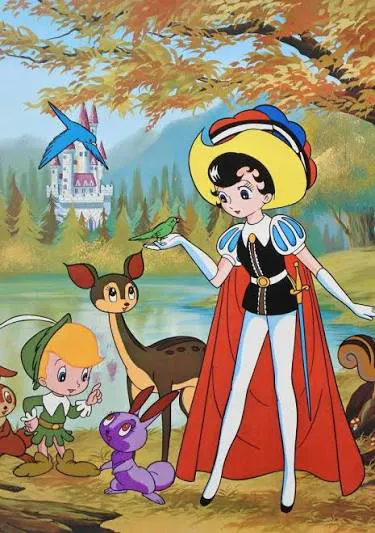
Princess Knight (Ribon no Kishi / Sapphire)
A groundbreaking precursor to the Shojo genre (manga targeted at young women). Designed with androgenous attire and a heroic gaze, Sapphire challenged traditional gender roles in the 1950s as a protagonist born with both the heart of a boy and a girl.
4. Industrial Revolution and Television Animation
Tezuka did not just create characters on paper; he founded Mushi Production, the studio that birthed the serial television anime production model with the adaptation of Astro Boy in 1963:
- Invention of Limited Animation: To make TV budgets and tight broadcast deadlines viable, Tezuka reduced the frame rate from 24 frames per second to 8 or 12. He prioritized camera pans, recycled walk cycles, and modular expressions (animating only the mouth or eyes while keeping the rest of the frame static).
- Philosophical and Humanistic Themes: Through his magnum opus, Phoenix (Hi no Tori), he proved that comics and animation could tackle complex topics like reincarnation, global history, the meaning of existence, and human mortality.
5. Legacy and Global Impact
The influence of Osamu Tezuka is immeasurable. Industry pioneers such as Hayao Miyazaki (Studio Ghibli), Katsuhiro Otomo (creator of Akira), and Naoki Urasawa (who paid homage to Tezuka with his acclaimed work Pluto) all credit the master’s oeuvre as the foundation of their creative vocations.
With over 700 illustrated stories and 150,000 drawn pages in his lifetime, Osamu Tezuka demonstrated that character design transcends simple entertainment: it is a powerful medium for conveying values, science, and philosophy across generations.
Frequently Asked Questions (FAQ) about Osamu Tezuka
Why is Osamu Tezuka known as “The God of Manga”?
He was given this honorary title due to his colossal productivity and his revolutionary transformation of manga storytelling—introducing cinematic techniques (varied camera angles, dramatic cuts, visual pacing) that turned Japanese comics into a mature, sophisticated, and global industry.
Is it true that Disney was inspired by Kimba for The Lion King?
This has been a topic of intense historical debate. Although Disney maintained that The Lion King (1994) was an original story, the visual similarities in character design, compositions, and names (Kimba / Simba) compared to Tezuka’s 1950 work are so striking that animation historians widely consider Kimba an undeniable influence.
Was Osamu Tezuka really a licensed medical doctor?
Yes. He studied medicine at Osaka University while drawing his early hit manga and earned his doctorate in Medicine with a scientific dissertation researching the sperm cells of freshwater snails.