


Walk Cycles: The Art of Character Movement
They say you can tell the true soul of an animator by the way they make their characters walk. A Walk Cycle is more than just a repeating loop; it is the ultimate test where weight, balance, and personality collide. From Mickey Mouse’s classic bounce to the Pink Panther’s iconic sneak, mastering the walk is the gateway to professional animation. Are you ready to take the first step and learn how to breathe life into cinema’s most essential movement?
What is a Walk Cycle?
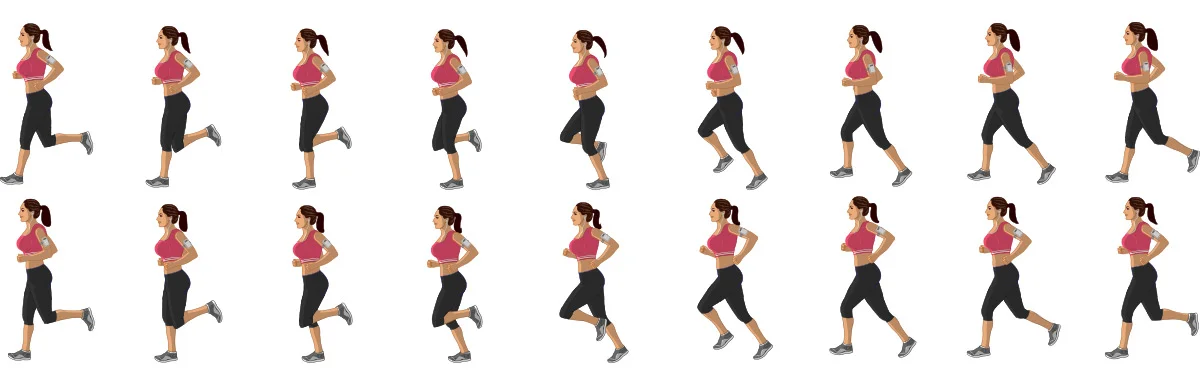
A Walk Cycle is a series of frames drawn in sequence that create a loop of a character walking. In professional production, the character is usually animated walking in place (stationary), allowing programmers or layout artists to move the entire “cycle” across the screen.
It is more than just movement; it is the most efficient way to convey a character’s personality, mood, and physical weight without a single line of dialogue.
The Technical Mechanics: The 4 Key Poses
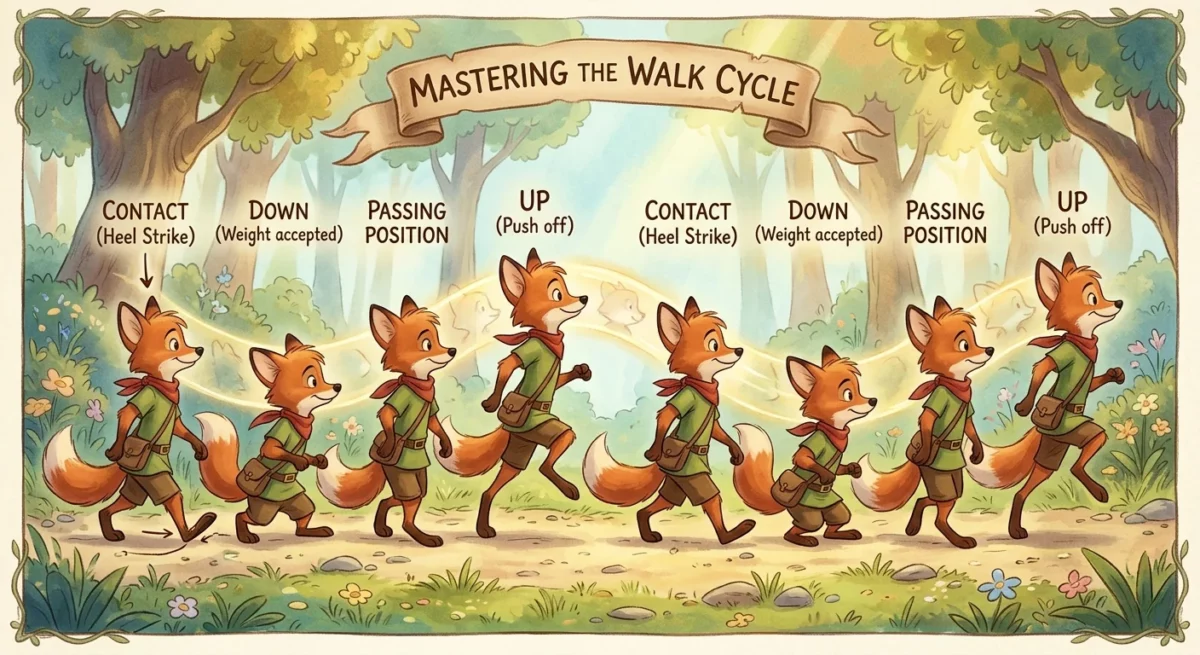
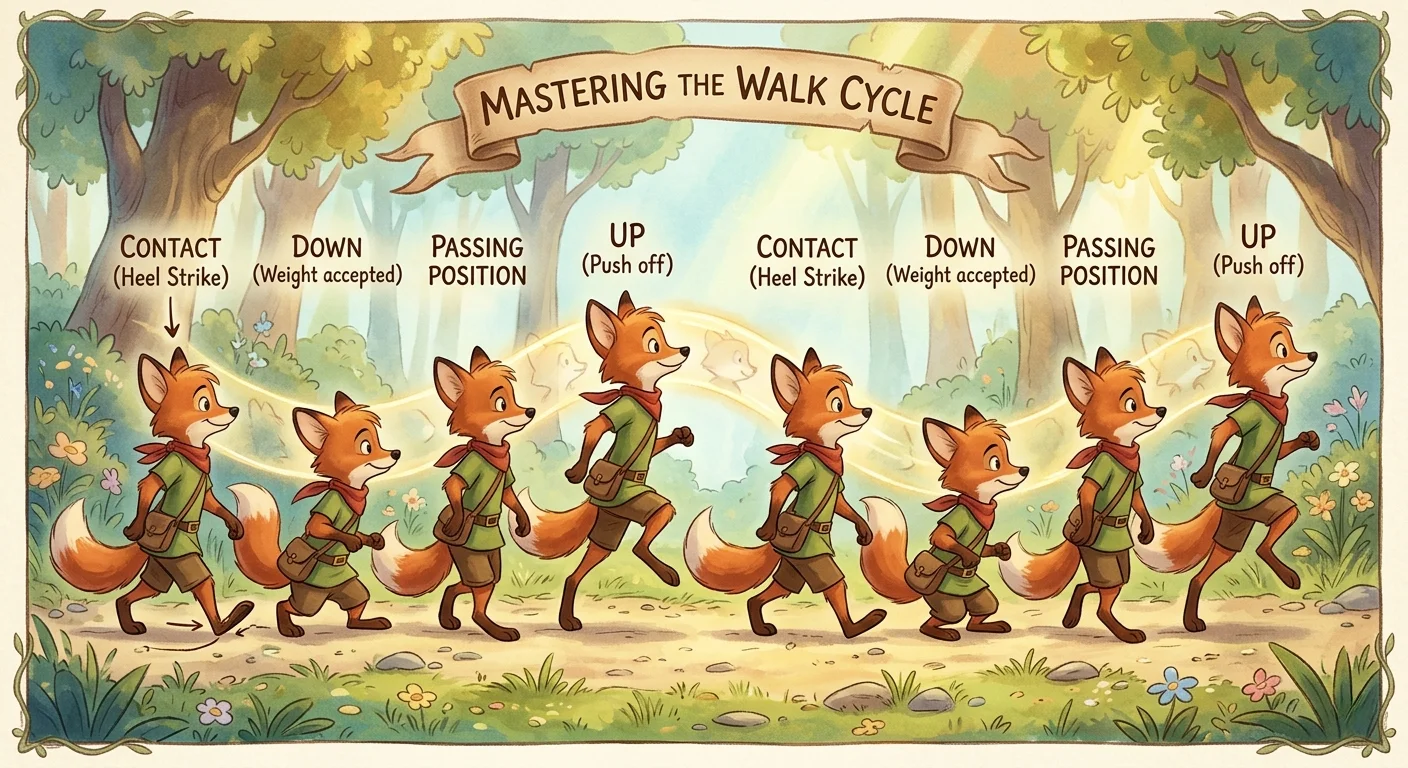
To create a convincing walk, animators rely on four fundamental positions. Mastery of these is what separates a mechanical movement from a lifelike one:
-
The Contact Pose: Both feet touch the ground. This defines the step length and the base of the walk.
-
The Down Pose (The Recoil): The lowest point. The character’s body absorbs the weight of the step. This is where you “feel” the gravity.
-
The Passing Position: One leg supports the body while the other swings forward.
-
The Up Pose (The Peak): The highest point. The character pushes off the ground to prepare for the next contact.
Types of Walk Cycles
Not all walks are created equal. In animation, we categorize them to define the “soul” of the scene:
-
The Standard Walk: Neutral and functional, used for background characters.
-
The Personality Walk: This includes the strut (confidence), the sneak (suspense), or the plod (exhaustion/sadness).
-
The Double Bounce: A stylized walk (very common in classic Mickey Mouse cartoons) where the character bounces twice per step.
-
Run Cycles: Technically different due to the “flight phase” (where both feet leave the ground), but built on the same looping principles.
Why is it so difficult?
The Walk Cycle is notoriously difficult because it requires a perfect balance of several of the 12 Principles of Animation:
-
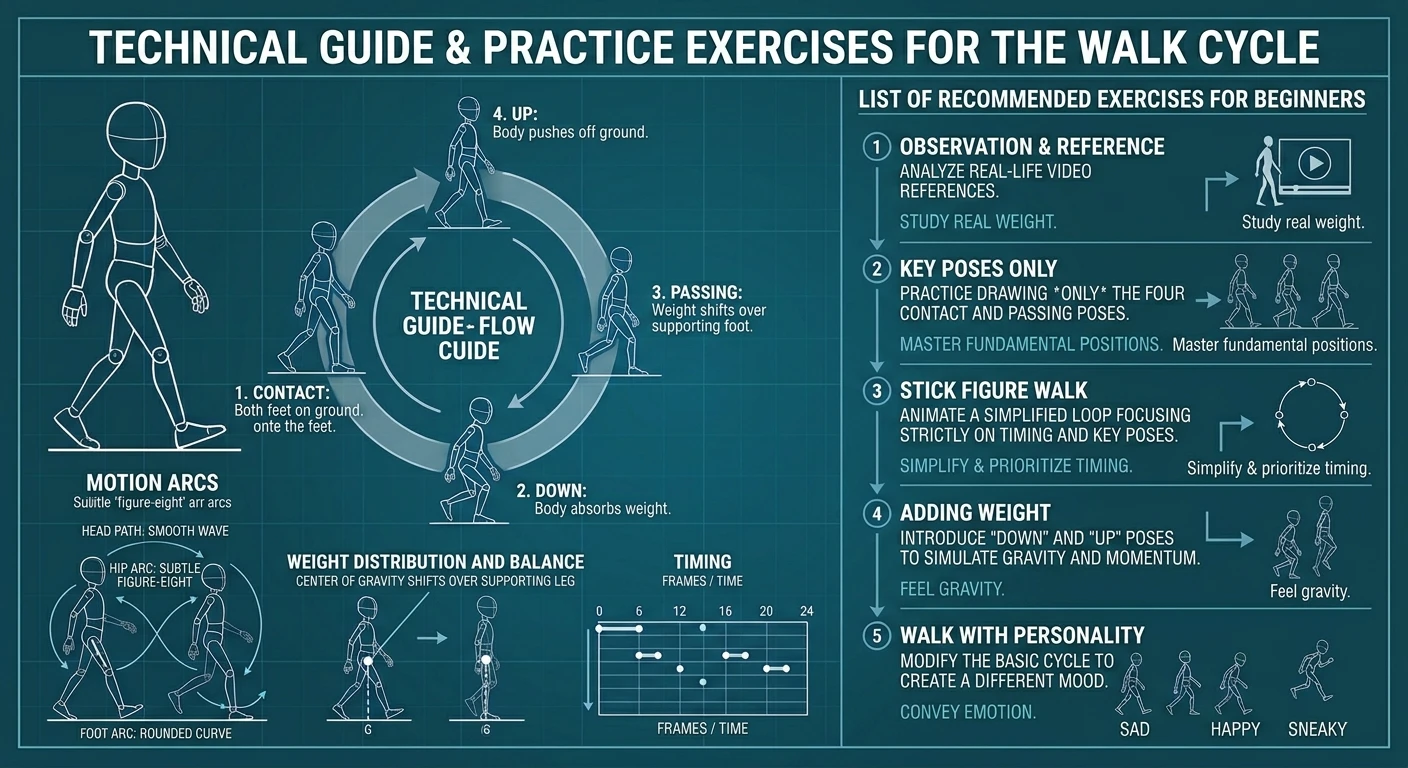
Weight & Balance: If the “Down Pose” isn’t heavy enough, the character looks like they are floating.
-
Arcs: The hips and head must move in subtle figure-eight or circular arcs.
-
Overlapping Action: The arms, hair, or clothing must react to the body’s vertical movement with a slight delay.
“A walk is the first thing an animator learns and the last thing they master.” — Richard Williams, Author of The Animator’s Survival Kit.
Famous Walk Cycles in History
-
Steamboat Willie (1928): The iconic rubber-hose “double bounce” that defined early Disney.
-
The Pink Panther: Famous for his stylized, rhythmic, and incredibly cool “sneaking” walks.
-
Richard Williams’ Masterclass: His work on Who Framed Roger Rabbit pushed walk cycles to a level of fluid complexity never seen before.
-
Spider-Man: Into the Spider-Verse: A modern revolution where different characters (Miles, Gwen, Peter B. Parker) have unique walk cycles that even use different frame rates to highlight their personalities.
Tips for Beginners
-
Animate the Hips First: The movement of the entire body is dictated by the pelvis.
-
Watch Real People: Record yourself walking or go to a park. Observation is an animator’s best tool.
-
Check the “Arcs”: Track the tip of the nose or the top of the head; it should follow a smooth, wavy line.
You can purchase the book ‘The Illusion Of Life: Disney Animation’ by Frank Thomas and Ollie Johnston on Amazon by clicking the image or here. In the book, the authors—who worked on numerous classic Disney films—formulate the famous 12 principles of animation. This is an essential work for anyone who loves the world of animation. This book will help you better understand animated masterpieces and create more effective and impactful animations, whether you are a professional or simply want to animate for fun

In Frank Thomas and Ollie Johnston’s book, besides explaining the technical side and the concepts behind these 12 principles of animation, we can appreciate all the magic and beauty of animated art.