



Mazinger Z
Mazinger Z: The Iconic Japanese Anime Series
Discover the fascinating universe of Mazinger Z, the legendary Japanese anime series that revolutionized the giant robot (mecha) genre. Created by Go Nagai in 1972, this landmark masterpiece combines action, futuristic technology, and heroic themes—solidifying its status as a pop culture icon and a global benchmark for the anime industry.
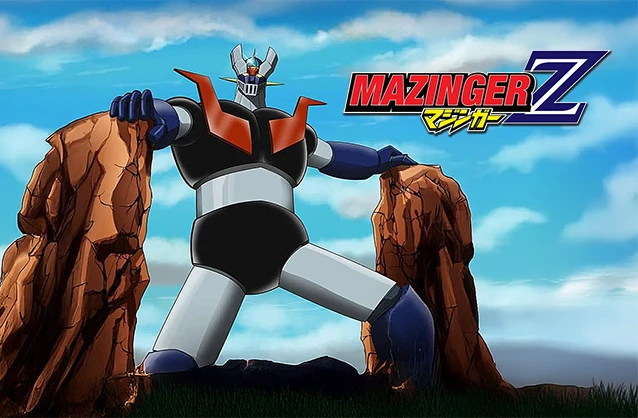
Table of Contents
- Free High-Resolution Mazinger Z Image Gallery
- Mazinger Z: The Robot That Revolutionized Anime and Animation
- Creators and Production
- Full-Color Mazinger Z Artwork
- Mazinger Z: The Classic That Defined Generations
- YOUTUBE VIDEO: Mazinger Z Returns to Action! The Giant Robot That Revolutionized Animation 🤖 ✨
Free High-Resolution Mazinger Z Image Gallery
Download free, high-quality images from the classic Japanese anime series Mazinger Z.

Kōji Kabuto, the Protagonist of Mazinger Z

Sayaka Yumi, Main Character of Mazinger Z

The Evil Baron Ashura

Kōji Kabuto Wearing His Helmet

The Hover Pilder Docked in Mazinger Z's Head

The Mighty Robot Mazinger Z

Mazinger Z Equipped with the Jet Scrander Wings

Supporting Characters Mucha, Boss, and Nuke

Mazinger Z and Kōji Rescuing Sayaka Yumi

Aphrodite A

Sayaka, Shirō, Boss, and Professor Gennosuke Visiting Kōji in the Hospital

Aphrodite A

Mazinger Z, the Giant Robot
Mazinger Z: The Robot That Revolutionized Anime and Animation
History of the Mazinger Z Anime Series
Mazinger Z is a seminal Japanese anime series created by Go Nagai and produced by Toei Animation in 1972. Spanning 92 episodes, it was the first series to feature a giant robot piloted from within by a human operator—a pioneering concept that defined the mecha genre. The story follows the adventures of Kōji Kabuto, who inherits control of Mazinger Z following the death of his grandfather, Professor Jūzō Kabuto. Armed with revolutionary weaponry—such as the Photonic Beams and the legendary Rocket Punch—Mazinger Z fights relentlessly against the evil mechanical beasts created by Dr. Hell and his lieutenants.
The Origins of the Saga
During an archaeological excavation on Bardos Island (Rhodes Island) in the Aegean Sea, an expedition team unearths the remains of an ancient civilization along with colossal automatons. The team leader, Dr. Hell (Doctor Infierno), instructs his fellow scientists to keep the discovery secret until the artifacts can be fully analyzed. Once the robots are restored, Dr. Hell reveals his true intentions of global conquest, commanding the automated giants to massacre the scientific team. Professor Kabuto narrowly escapes back to Japan, where he secretly begins building a giant defender to confront Dr. Hell and his mechanical beasts.
Years later, Professor Kabuto reveals Super Alloy Z, a nearly indestructible material refined from Japanium—a new element discovered near Mount Fuji. Meanwhile, as Dr. Hell prepares to launch his mechanical army, he prioritizes the destruction of Professor Kabuto and his laboratory. Baron Ashura (Barón Ashler), Dr. Hell’s loyal servant, is dispatched to eliminate Kabuto and secure the Japanium supply.
After receiving an urgent call from his grandfather, Kōji Kabuto arrives to find his home in ruins following Baron Ashura’s assault. The mortally wounded professor hands Kōji a letter, exposes Dr. Hell’s plot, and entrusts him with his ultimate creation: Mazinger Z—the sole force capable of stopping Dr. Hell’s mechanical monsters.
Conception and Creative Vision
Influenced by earlier manga and anime classics, creator Go Nagai conceived the revolutionary concept of a human piloting a giant machine, giving birth to a brand-new genre. In early concept designs, the series was titled Energer Z, featuring a pilot who boarded the robot by driving a motorcycle up a ramp on its back. Nagai ultimately discarded this idea, drawing inspiration instead from his manga Demon Lord Dante—where a human merges with the head of a demon. He replaced the motorcycle with a flying glider unit (Hover Pilder).
The name Mazinger Z merges the Japanese words Ma (demon) and Jin (god), combined with the -ger suffix carried over from its initial title. This wordplay embodies the core duality of good and evil: the Japanese pronunciation (Mājingā) confers a dual nature upon the giant robot. Depending on the pilot’s choices, Mazinger Z possesses the potential to be a benefactor or a destroyer—a savior god or a demonic force.
Creators and Production
Go Nagai, renowned for his bold vision and groundbreaking creativity, is the mastermind behind Mazinger Z. His pioneering concept was to have a giant robot piloted from within by a human, rather than acting autonomously. The series was brought to life by Toei Animation, the acclaimed studio that would later produce global hits such as Dragon Ball and Sailor Moon.
Full-Color Mazinger Z Artwork
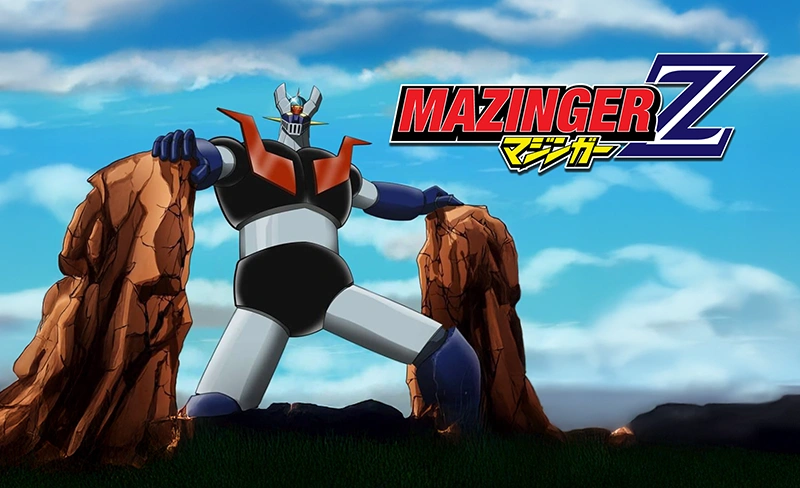
Click on the image or [here] to download this high-resolution Mazinger Z illustration in PDF format.

Professor Gennosuke Yumi

Dr. Hell

The Official Japanese Mazinger Z Logo

Boss Borot from the Mazinger Z Series

Mazinger Z: The Classic That Defined Generations
Main Characters
Professor Jūzō Kabuto (兜十蔵博士, Kabuto Jūzō-hakase)
Professor Jūzō Kabuto is the visionary creator of Mazinger Z and the grandfather of Kōji and Shirō Kabuto. A brilliant scientist, Jūzō co-developed the revolutionary Photonic Energy (Photonic Power) alongside Professor Yumi and formulated Super Alloy Z (Chōkokin Z), the vital material used to build Mazinger Z. Following the tragic death of Kōji’s parents in a laboratory accident, Jūzō became the sole guardian of his grandsons. His life came to a dramatic end when he was assassinated by Dr. Hell and Baron Ashura, who rigged an explosion in his home. In the original manga, Jūzō built Mazinger Z without initially knowing Dr. Hell’s evil plans. Instantly recognizable by his long white hair, eye patch, and facial scar, the character features distinct design and narrative differences between the manga and anime versions.
Kōji Kabuto (兜 甲児, Kabuto Kōji)
Kōji is the main protagonist of Mazinger Z and the fearless pilot of the titular mecha. Son of Kenzo and Nishikiori Kabuto, he was orphaned at a young age after a failed scientific experiment and raised by his grandfather, Jūzō. Brave, hot-headed, and fiercely independent, Kōji is a capable student and an accomplished martial artist skilled in karate and kendo. Though initially distrustful, his deep sense of duty drives him to fight relentlessly against Dr. Hell and his mechanical beasts. Between battles, Kōji longs for peace and quiet—though trouble always finds him, whether it’s Boss and his gang, his headstrong friend Sayaka, or new villainous threats.
Shirō Kabuto (兜 シロー, Kabuto Shirō)
Shirō is Kōji’s younger brother—a curious, energetic boy eager to learn. Despite his young age, his quick thinking and keen observations often prove invaluable to Kōji during battles with mechanical monsters. Shirō deeply admires his older brother and relies heavily on him, as Kōji is his only remaining family.
Sayaka Yumi (弓 さやか, Yumi Sayaka)
Sayaka, daughter of Professor Genosuke Yumi, is the pilot of Aphrodite A and the series’ female lead. Raised solely by her father after her mother passed away during childbirth, Sayaka was the star of the Photonic Energy Research Institute until Kōji and Mazinger Z arrived and stole the spotlight. Although prone to occasional jealousy, she holds deep admiration for Kōji’s courage. Sayaka is a determined, capable young woman and a judo black belt. Despite their frequent bickering, her bond with Kōji gradually evolves into a classic romantic interest.
Professor Genosuke Yumi (弓 弦之介, Yumi Gennosuke-hakase)
Director of the Photonic Energy Research Institute, Professor Yumi is a calm, highly responsible leader. Alongside Jūzō Kabuto, he helped harness the power of Photonic Energy. Though widowed at Sayaka’s birth, he maintains an unyielding sense of duty to humanity and is always prepared to sacrifice himself for the greater good. Beneath his stern exterior, he finds peace in seeing the younger generation enjoy life despite the chaotic world around them.
Professor Sewashi (せわし博士, Sewashi-hakase)
Short, bearded, and perpetually hyperactive, Professor Sewashi is a technical genius responsible for maintaining Mazinger Z in top combat condition. His pointed beard and restless energy make him a memorable highlight of the research team.
Professor Nossori (のっそり博士, Nossori-hakase)
Nossori is a tall, thin, and soft-spoken elderly scientist. Despite his slow demeanor, his extensive experience and patience are key to preventing critical errors under pressure. He works endlessly to upgrade Mazinger Z and support the allied mecha.
Professor Morimori (もりもり博士, Morimori-hakase)
Morimori is a brilliant scientist and a long-time father figure to Kōji, whom he has known since childhood. Among his key technological contributions are the legendary Jet Scrander (which allows Mazinger Z to fly) and the deadly Iron Cutter upgrade. Tragically, he loses his life in an assassination attempt orchestrated by Count Brocken.
Boss (ボス, Bosu)
Boss is the leader of a delinquent motorcycle gang at Kōji’s high school. Starting as a comedic rival, he eventually becomes one of Kōji’s closest allies after being saved on multiple occasions. Boss goes on to pilot his own signature mecha, the comical Boss Borot—a robot built entirely from scrap metal whose wacky, inconsistent proportions from episode to episode reflect both the character’s comedic nature and the animation style of the era.
The Villains of Mazinger Z
Doctor Hell (ドクター・ヘル, Dokutā Heru)
Dr. Hell, a brilliant yet twisted German scientist, is the primary antagonist of Mazinger Z. Driven by intense resentment rooted in childhood trauma and physical weakness, his obsession with vengeance culminates in a campaign for world domination. To conquer humanity, he deploys an army of mechanical beasts commanded by his loyal lieutenants: Baron Ashura, Count Brocken, and Viscount Pigman. Though seemingly the ultimate mastermind, he is later revealed to be a pawn in a far grander, more sinister scheme. In the anime, he dies alongside Count Brocken in the penultimate episode; in the original manga, his arc concludes in an epic final showdown where he personally pilots his ultimate mecha against Mazinger Z.
Baron Ashura (アシュラ男爵, Ashura-danshaku)
Baron Ashura is one of the most iconic villains in anime history, instantly recognizable by a body split vertically into male and female halves. Created by Dr. Hell by fusing the mummified remains of two ancient Mycenaean priests (a man and a woman), Ashura exhibits a dual personality, speaking with overlapping voices and constantly shifting between contrasting mindsets. Commanding the Iron Mask army and the submarine fortresses Salude and Bood, Ashura fights relentlessly to destroy Mazinger Z. However, repeated failures strain Dr. Hell’s patience, spurring a bitter rivalry with Count Brocken. In episode 78, Ashura meets a tragic end during a failed kamikaze attack, crashing the fortress into Mazinger Z in a final attempt to destroy the robot.
Count Brocken (ブロッケン伯爵, Burokken-hakushaku)
Count Brocken (known in some localized dubs as Count Decapitated) is a resurrected cyborg officer modeled after WWII-era commanders. His signature visual trait is a severed, cybernetic head that floats independently above his armored torso. Dressed in a military uniform adorned with an Iron Cross, Brocken features a monocle, a thin mustache, and sharp fangs. He commands the flying fortress Ghouls (Gore) and his specialized army, the Iron Crosses. Ruthless, tactical, and aggressive, Brocken poses an even greater threat than Ashura. Despite their fierce rivalry, the two occasionally join forces on high-priority missions, such as the heist to steal Japanium. Brocken remains loyal to Dr. Hell until his death in the series’ final episodes.
Viscount Pigman (ピグマン子爵, Piguman-shishaku)
Viscount Pigman serves as Dr. Hell’s high-ranking commander following the downfall of Baron Ashura. Pigman possesses eerie, illusionary powers that mimic black magic, making him a terrifying adversary. His unconventional design pairs a small, tribal shaman torso atop a massive, heavily armored body. Highly impulsive and prone to insubordination, Pigman frequently bypasses Dr. Hell’s orders to engage Mazinger Z directly in hand-to-hand combat. In episode 87, Pigman perishes during an all-out assault on the Photonic Energy Research Institute, blowing up into mechanical debris and confirming his cybernetic nature.
Archduke Gorgon (ゴーゴン大公, Gōgon-taikō)
Archduke Gorgon, a terrifying hybrid of a human torso mounted on a saber-toothed tiger, is a mysterious operative aligned with Dr. Hell. He serves as an advance agent for the Mycenae Empire—an ancient subterranean civilization driven underground by a prehistoric cataclysm. Gorgon supplies Dr. Hell with advanced Warrior Beasts (Kikaiju), formidable mechanical monsters fused with organic elements capable of penetrating Super Alloy Z. Gorgon’s presence marks the transition toward a much larger threat, serving as the bridge to the Great Mazinger storyline.
Iron Masks (アイアンマスク, Aian Masuku)
The Iron Masks are the low-ranking foot soldiers under Baron Ashura and Dr. Hell. Dressed in armor inspired by classical Macedonian military garb, these brainwashed or cybernetically modified troopers are equipped with swords, pistols, and submachine guns. Beyond crewing the submarine fortresses Salude and Bood, they handle base maintenance, vehicle operation, and black-ops missions such as kidnappings and demolitions.
Iron Crosses (アイアンクロス, Aian Kurosu)
The Iron Crosses serve as Count Brocken’s elite military force. Dressed in dark gray uniforms echoing WWII-era German military attire, these specialized troopers operate the flying fortress Ghouls, assemble mechanical beasts, and execute high-risk operations including airborne assaults, intelligence gathering, and sabotage.
Allied Mecha
Aphrodite A: Mazinger Z’s First Ally
Originally designed as a civil utility robot for mining and construction, Aphrodite A was refitted into Mazinger Z’s most faithful combat partner, piloted by Sayaka Yumi. Like Mazinger Z, Aphrodite is controlled via a cockpit glider (Scarander/Pilder-style craft) protected by a clear hemispherical canopy and propelled by directional micro-rockets. This craft double-functions as Sayaka’s primary personal transport.
Although Aphrodite A lacks the sheer power and heavy armor of Mazinger Z, she was reinforced with Super Alloy Z and outfitted with her signature chest missiles (Oppai Missiles), which became one of the series’ most recognizable weapons. Despite her bravery on the frontline, Aphrodite A suffered frequent battle damage and underwent endless repairs until her ultimate destruction. Nevertheless, her legacy endures as a symbol of teamwork, resilience, and Sayaka’s heroic courage.
Minerva X: The Enigmatic Female Mecha
Minerva X is one of the most iconic, tragic mecha in the franchise—though her episode was omitted during the original broadcast in Spain. Designed by Professor Jūzō Kabuto as a companion unit to Mazinger Z, her schematics were stolen by Dr. Hell, who built her using standard Super-Steel rather than the indestructible Super Alloy Z. While equipped with offensive capabilities matching Mazinger Z, Minerva X was embedded with a secret, hardwired circuit board left unexplained in Jūzō’s blueprints..
When Dr. Hell deploys Minerva X to destroy Mazinger Z, he instantly loses control of her. As she approaches Mazinger, the unknown circuit activates: revealing that Minerva X and Mazinger Z were designed to pair, synchronize, and fight side-by-side as partner units, not opponents. Without Super Alloy Z to regulate her internal power, the emotional synchronization causes Minerva X to overheat, purging coolant liquid through her eyes in a visual effect that mimics tears. Realizing she will turn against him, Dr. Hell sends another mechanical beast to destroy her before she can be repaired and recruited by Kōji.
Boss Borot: The Unlikely Comedic Ally
Frustrated by Sayaka’s lack of attention and tired of Kōji getting all the spotlight, Boss takes matters into his own hands by creating his own mecha: Boss Borot (Boss Robot). By kidnapping three key scientists from the Photonic Energy Research Institute, Boss forces them to build a makeshift robot out of scrap metal, old radiators, and recycled refrigerators. Though nowhere near as advanced or durable as Mazinger Z or Aphrodite A, Boss Borot regularly steps up as an unexpected lifeline in critical battles.
Despite its clumsiness, comical expressions, and tendency to literal disassembly during combat, Boss Borot has saved Mazinger Z and its allies on numerous occasions. Built on pure willpower and street smarts, this makeshift warrior proves that even the most unconventional hero can turn the tide of battle.
Dianan A: Aphrodite’s High-Tech Successor
Following the tragic destruction of Aphrodite A, Sayaka Yumi receives a combat-upgraded successor: Dianan A (Diana A), built explicitly for high-intensity warfare. Dianan A is equipped with the devastating Scarlet Beam (Aurora Beam/Scarlet Laser), a high-yield Photonic Energy weapon capable of melting through enemy armor. Beyond raw firepower, the mecha introduces a futuristic boarding sequence for Sayaka.
Replacing the traditional glider cockpit, Sayaka now rides a specialized motorcycle called the Scarlet Mobile. Upon request, Dianan A projects a rainbow-colored tractor beam—the Aurora Beam—that lifts the motorcycle directly into the robot’s head module. This sleek docking mechanic elevates Dianan A’s aesthetic, making Sayaka a far more formidable, independent threat against Dr. Hell’s forces.
Supporting Characters
Among the iconic supporting characters who back up the main heroes and bring humor, warmth, and color to the series are:
Mucha (ムチャ, Mucha): One of Boss’s inseparable sidekicks. Thin, jittery, and easily panicked, he provides a great deal of slapstick comedy alongside Nuke.
Boss (ボス, Bosu): The rowdy leader of the gang, known for his imposing physical build and a character that balances clumsiness with surprising bravery. He later pilots his own makeshift mecha, Boss Borot.
Nuke (ヌケ, Nuke): The second member of Boss’s trio. Lanky, dim-witted, and perpetually clueless, he acts as the perfect comedic foil in tight situations.
These characters are essential for delivering lighthearted comic relief, creating a vivid contrast to the intense mecha battles and dramatic stakes of the series.
Iconic Elements, Weapons, and Technology
The Pilder: The Heart of Mazinger Z
The Pilder is the crucial control module of Mazinger Z. More than just a cockpit, it functions as an independent, fully armed hovering vehicle. In the early days of the series, before Mazinger Z gained the ability to fly, the Pilder served as Kōji Kabuto’s primary craft for engaging enemies in aerial dogfights. Equipped with both offensive and defensive measures, it packed machine guns, energy beam cannons, missiles, and smoke screens.
Initially, Kōji piloted the Hover Pilder, which relied on dual vertical-lift rotors for propulsion. It was later replaced by the upgraded Jet Pilder, which incorporated directional jet thrusters. This overhaul dramatically boosted its maneuvering speed, acceleration, and combat survivability.
When not in combat, the Pilder was parked right on the porch of the Kabuto household, alongside Kōji’s motorcycle and Shirō’s bicycle. Kōji famously boarded the cockpit by taking a dramatic, high-flying leap from his second-story bedroom window, always ready to launch at a moment’s notice.
The Jet Scrander: Wings to Conquer the Skies
Originally restricted to ground combat, Mazinger Z could reach a maximum running speed of 360 km/h. To counter Dr. Hell’s flying mechanical beasts, the scientists at the Photonic Energy Research Institute engineered the Jet Scrander—a game-changing flight module designed to give the giant robot true aerial superiority. Powered by high-output rocket boosters, this dockable wing assembly allowed Mazinger Z to reach supersonic flight speeds of Mach 3. The module clamped onto Mazinger’s waist via a reinforced midsection latching system, ensuring precise mid-air docking even at full velocity.
The Jet Scrander was far more than a mobility upgrade; it double-functioned as a lethal weapon. Its razor-sharp wing edges could slice cleanly through enemy armor during high-speed flybys (Scrander Cutter), and it housed a launcher for razor-sharp cross shurikens known as Southern Cross Knives.
For security reasons, the Jet Scrander was eventually relocated from the main facility to a secret, subterranean launch ramp hidden inside a nearby mountain—a strategic move made after repeated sabotage attempts by Dr. Hell’s forces.
The Hangar: The Hidden Stronghold
Mazinger Z relies on Photonic Energy to power its systems, making its specialized hangar beneath the Photonic Energy Research Institute vital for operations. The hangar is concealed under an outdoor swimming pool, which masks its existence while allowing the stored robot to absorb solar energy. Photonic Energy is produced by combining a Japanium reactor with concentrated light energy; during emergencies, this process is boosted via direct photo-atomic charging.
When Kōji calls for launch, the pool splits down the middle, revealing an elevator platform that raises the 20-ton behemoth to the surface. Kōji then swoops in with the Pilder to dock into Mazinger Z’s head unit (Pilder On!), powering up the system. The giant robot awakens as solar rays reflect off its chest plate, fully charged and combat-ready.
The Energy Barrier: An Impenetrable Defense
While not an integrated component of Mazinger Z itself, the Photonic Energy Barrier is essential for protecting both the research institute and the mecha during maintenance. Generated by specialized projection towers that direct force beams into a central spire, the system forms a crystalline or hemispherical energy shield. This force field is capable of repelling the most destructive attacks launched by Dr. Hell’s mechanical beasts.
However, as Dr. Hell continually engineered stronger monsters designed to breach the shield, the Institute’s scientists were forced to constantly upgrade its output. Despite frequent close calls, the barrier remains a testament to the Institute’s technological ingenuity and its first line of defense.
Cultural Impact and Legacy
The original Mazinger Z anime series premiered in Japan on December 3, 1972, and concluded its initial run on September 1, 1974.
The series debuted in Spain in 1978, instantly becoming a massive cultural phenomenon that defined a generation. Mazinger Z achieved monumental global success, particularly across Spain and Latin America throughout the 1970s and 1980s. Its iconic soundtrack, memorable character ensemble, and epic battles against mechanical beasts—fueled by a spectacle of laser beams, flashing lights, and explosive action—solidified the show as a timeless classic. The groundbreaking concept of human-piloted giant robots (mecha) went on to inspire generations of creators, laying the foundation for legendary franchises such as Voltron, Mobile Suit Gundam, and Neon Genesis Evangelion.
Fun Facts & Trivia
During its international distribution in the 1970s and 1980s, localized dubs introduced unique regional slang and iconic catchphrases tailored to local audiences.
In Spanish-speaking regions, the legendary battle cry “¡Puños fuera!” (“Rocket Punch!”) became an indelible pop-culture slogan for generations of fans.
The franchise continues to thrive through numerous sequels, spin-offs, and modern reboots, including Mazinkaiser and the feature film Mazinger Z: INFINITY.
Why Watch Mazinger Z Today?
For adult fans, returning to Mazinger Z offers an nostalgic journey back to childhood, filled with high-octane action and thrilling storytelling. For younger audiences, it serves as an exciting opportunity to discover the pioneer that laid the groundwork for the modern mecha genre enjoyed today.
Explore More
Check out our dedicated Mazinger Z special feature video on our YouTube channel—don’t miss it! You can also explore our high-resolution image gallery, video clips, and exclusive trivia about this legendary anime series right here.
Understanding the Mecha Genre
Giant robots constitute a iconic sci-fi subgenre—deeply rooted in Japanese anime and manga—that showcases colossal machines either piloted by humans or powered by artificial intelligence. Often serving as advanced weaponry or specialized tools, these behemoths are deployed to defend humanity, combat alien threats, or battle rogue monsters. The genre is defined by imposing scale, futuristic engineering, and narrative themes centered around heroism, ethical dilemmas, and high-stakes warfare. Classic benchmarks include Mazinger Z, Mobile Suit Gundam, and Neon Genesis Evangelion.
The term mecha (short for mechanical) encompasses everything from pilotable giant robots to wearable armored exoskeletons. While some mecha are built purely for military frontline combat (such as those in Mazinger Z), others are designed for civil engineering or law enforcement (like the patrol suits in Mobile Police Patlabor).
The term mecha encompasses both colossal giant robots and smaller powered exosuits, having established itself as a true cornerstone of Japanese pop culture. While some mecha, such as those in Mazinger Z or Gundam, are designed strictly for military combat, others—like the units in Patlabor—are built for civil engineering, construction, or law enforcement.
Beyond spectacular combat, the mecha genre frequently delves into deeper themes: the human cost of war, the ethics of emerging technology, and the psychological bond between a pilot and their machine—making robots one of the most enduring and beloved tropes in all of anime and manga culture.
Robots are one of the most popular and recurring themes in both manga and anime as a whole.

YOUTUBE VIDEO: Mazinger Z Returns to Action! The Giant Robot That Revolutionized Animation 🤖 ✨
Enjoy this video featuring the best images from the legendary series Mazinger Z. Listen to the nostalgic theme music and get key insights into its main characters. And don’t forget to subscribe to our YouTube channel, which you can visit here!
Here are some products we recommend. If you’re interested and purchase them on Amazon, you’ll also be supporting our project. 😀