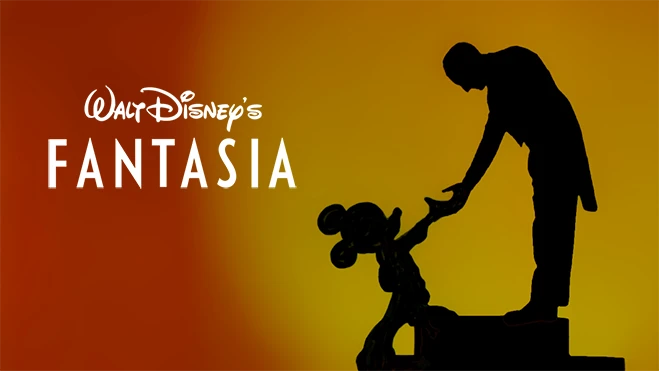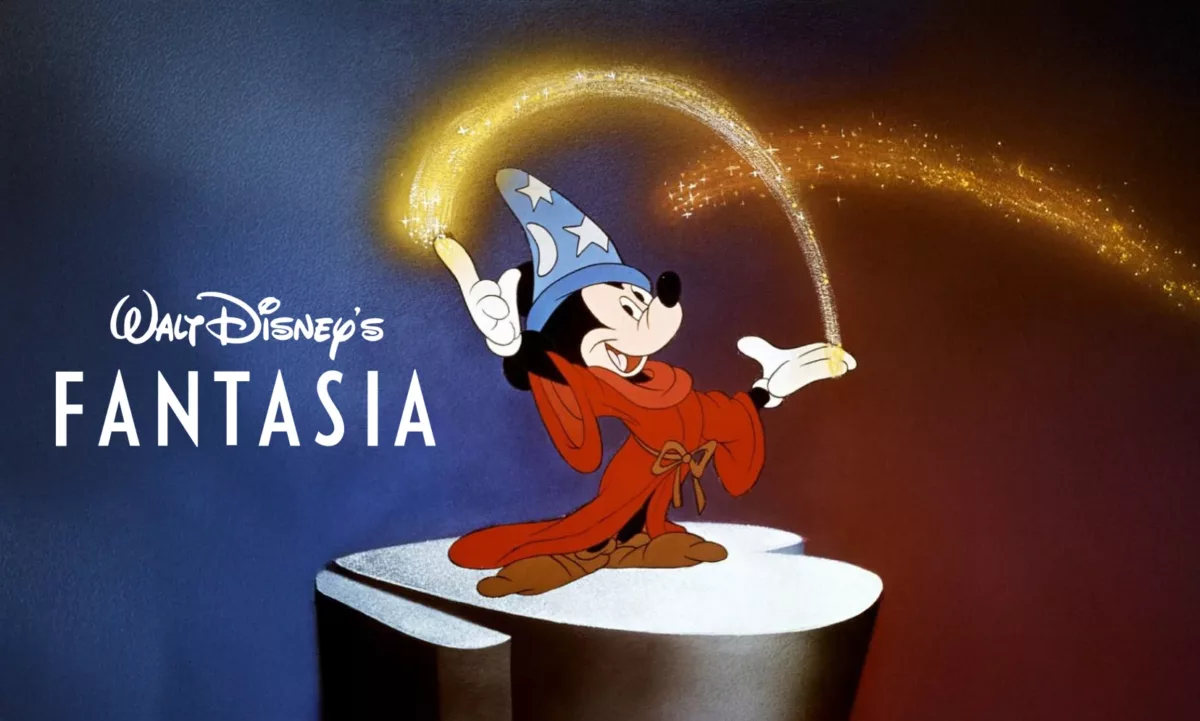




Fantasia and Fantasia 2000: Disney’s magic meets classical music
Fantasia (1940) and Fantasia 2000 (1999) are two of the most breathtaking works in the history of animation. In these masterpieces, Walt Disney and his team merged the power of classical music with unforgettable imagery, creating films that are much more than just cartoons: they are true visual and auditory spectacles.
In Fantasia, Mickey Mouse amazed us as the famous Sorcerer’s Apprentice, while other musical pieces, such as the Dance of the Hours or Night on Bald Mountain, brought fantastic and astonishing worlds to life.
Decades later, Fantasia 2000 recaptured the innovative spirit of the original, featuring new musical pieces and stunning animated sequences such as The Firebird or Rhapsody in Blue, all accompanied by a modern digital recording.
Over the years, both films have been restored and re-released several times, adapting to new generations without losing their essence: the meeting point between the art of animation and the grandeur of music.
At El Parque de los Dibujos, we invite you to discover the history, characters, and fascinating facts behind these two Disney gems that continue to move audiences all over the world.
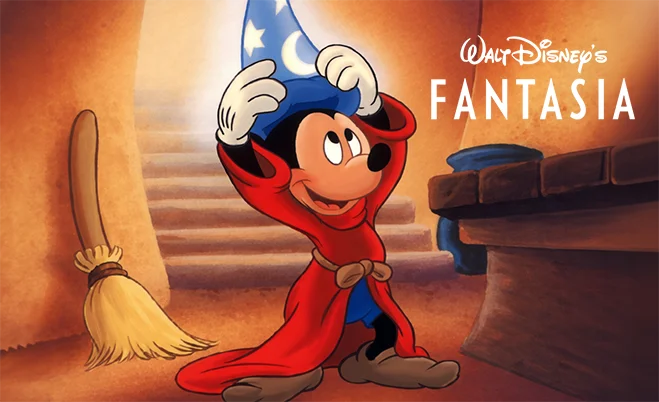
🎬 These are the contents of Walt Disney’s Fantasia.
- HISTORY OF ANIMATION” SERIES VIDEO: Disney’s Fantasia, its re-releases and trailers through time.
- Fantasia is a living work that transcends generations.
- Fantasia image gallery for download
- The Music of Fantasia
- Why is it considered by many to be Disney’s greatest film?
- Essential Technical Specifications: Fantasia (Walt Disney, 1940)
- Its Contribution to Animation History

If you are passionate about cartoons and the history of animation in general, visit our YouTube channel. here. Follow us on our social media to stay up to date with our new content and join us on this journey through the animated world.
Fantasia is a living work that transcends generations.
Every re-release is much more than just a launched copy: it is a technical and artistic rebirth. Colors are polished, the soundstage is expanded, and forgotten frames are rescued, as if the film breathes with each passing era. This makes Fantasia a symbol for dreamers and lovers of beauty—a reminder that art can be updated without losing its essence.
-
For curious ears: from analog Fantasound to Atmos, the music continues to surround and amaze.
-
For discerning eyes: each new scan reveals brushstrokes and backgrounds that previous copies couldn’t show.
-
For the creative spirit: the new segments in Fantasia 2000 inspire us to imagine future expansions.
Thus, eight decades later, Fantasia and Fantasia 2000 continue to invite us to close our eyes, open our minds, and see the music with the same awe as in 1940, reminding us that true masterpieces never end: they simply evolve with us.


Film still from a Walt Disney’s Fantasia trailer
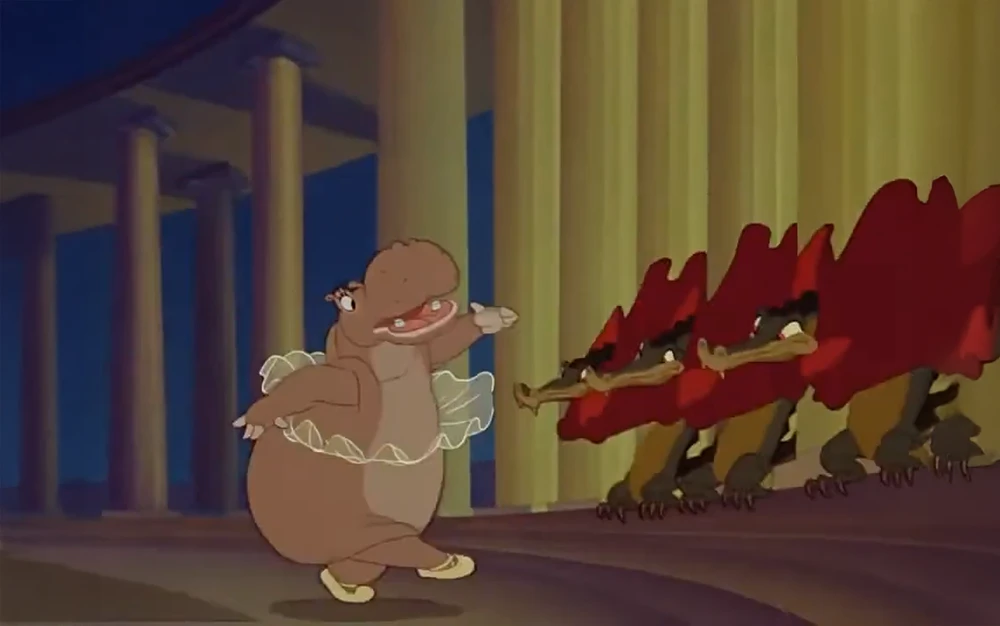
Film still from Fantasia

Film still from Fantasia, demon
Fantasia image gallery for download

Art and beauty in the film Fantasia, image 4

Film still from Fantasia with seated centaurette

Film still from Fantasia with dancing flowers

Original sketch 1 for The Sorcerer's Apprentice scene
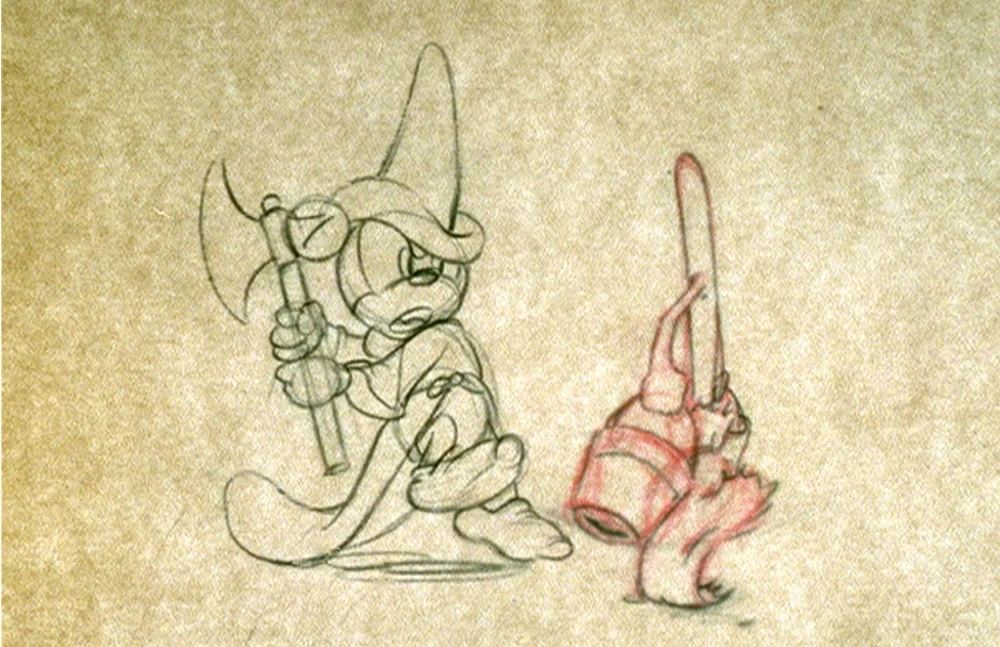
Original sketch 2 for The Sorcerer's Apprentice scene

Film still from the 1940 film Fantasia, forest with fairies

Film still from Fantasia with walking centaur
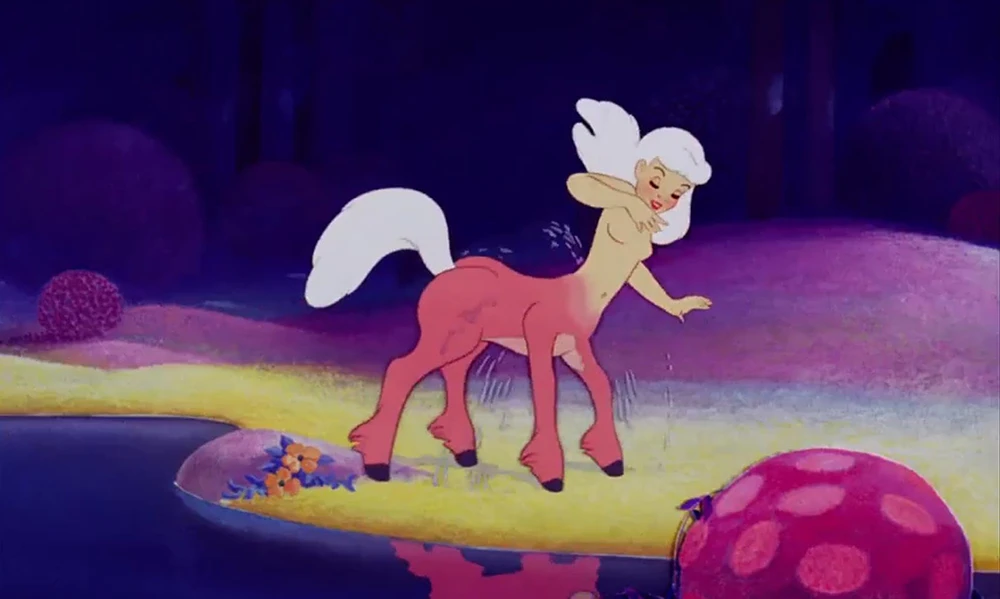
Film still 2 from Fantasia with walking centaur

Art and beauty in the film Fantasia, image 2
Trivia and Technical Facts
-
Fantasound Pioneer (1940)
Disney developed a 4-channel stereophonic sound system for Fantasia, predating surround sound cinema by more than a decade. -
The Ruin and the Rebirth
The high production costs and World War II restricted the original release, but the re-releases of 1946, 1956, 1969, and 1977 rescued the film for new audiences. -
Frame-by-Frame Restorations
The copy we know today comes from a scan of the original negatives, cleaned frame by frame and digitally remixed. -
IMAX and Fantasia 2000
The 1999 release was the first animated feature film screened in IMAX, featuring a 5.1 audio mix and fully digital animation. -
Guest Directors
Fantasia 2000 featured Eric Goldberg, Pixote Hunt, and Hendel Butoy, among others, alongside presenters such as Steve Martin, Quincy Jones, and Angela Lansbury. -
An Endless Project
Walt Disney wanted Fantasia to be a ‘living film,’ expandable with new segments every few years. Fantasia 2000 fulfilled part of that dream.

The Music of Fantasia
🎼 Musical Segments of Fantasia (1940)

| Musical Piece | Composer | What You See on Screen | |
|---|---|---|---|
| 1 | Toccata and Fugue in D minor | Johann Sebastian Bach | Pure abstraction of lights and shapes that ‘paint’ the music. |
| 2 | Suite del Cascanueces | Piotr Ilich Tchaikovsky | The changing seasons portrayed by fairies, flowers, and fish. |
| 3 | The Sorcerer’s Apprentice | Paul Dukas | Mickey Mouse as an aspiring magician who loses control of his magic. |
| 4 | The Rite of Spring | Igor Stravinski | The history of Earth, from the planet’s formation to the extinction of dinosaurs. |
| 5 | Interlude: “Meet the Soundtrack | — | An animated line ‘dialogues’ with the orchestra to explain how sound works. |
| 6 | The Pastoral Symphony | Ludwig van Beethoven | A mythical world of centaurs, cupids, and gods from Greek mythology. |
| 7 | Dance of the Hours | Amilcare Ponchielli | A comedic ballet performed by ostriches, hippos, elephants, and alligators. |
| 8 | Night on Bald Mountain / Ave Maria | Modest Mussorgski · Franz Schubert | The powerful demon Chernabog summoning evil spirits. A peaceful, spiritual procession of monks through a forest. |
🎶 Musical Segments of Fantasia 2000 (1999)

| Musical Piece | Composer | What You See on Screen | |
|---|---|---|---|
| 1 | Symphony No. 5 (1º mov.) | Ludwig van Beethoven | Abstract butterfly-like shapes representing the battle between light and darkness |
| 2 | Pines of Rome | Ottorino Respighi | A pod of humpback whales that takes flight when a supernova occurs. |
| 3 | Rhapsody in Blue | George Gershwin | A 1930s New York City story following four people dreaming of a better life. |
| 4 | Piano Concerto No. 2 (Allegro) | Dmitri Shostakóvich | The Steadfast Tin Soldier and the paper ballerina face off against an evil jack-in-the-box. |
| 5 | The Carnival of the Animals (Finale) | Camille Saint-Saëns | Playful flamingos unleash chaos with a yo-yo. |
| 6 | The Sorcerer’s Apprentice | Paul Dukas | A reunion with the classic Mickey segment, digitally restored. |
| 7 | Pomp and Circumstance (Marches 1-4) | Edward Elgar | Donald and Daisy help a zoological parade in a version of Noah’s Ark. |
| 8 | The Firebird (1919 Suite) | Igor Stravinski | The Forest Sprite is reborn following an apocalyptic volcanic eruption. |
Leopold Stokowski (1882-1977) was a British-American conductor celebrated for his opulent sound and technical innovations. He was an essential part of the Philadelphia Orchestra’s golden age (1912-1941), where he fostered a warm, exuberant timbre still known today as the ‘Philadelphia Sound.’
A visionary in recording, he experimented with stereophony and orchestral seating, and collaborated with Walt Disney on Fantasia (1940), conducting and orchestrating much of the soundtrack. He also created symphonic transcriptions of Bach’s works, popularized contemporary music (Stravinsky, Rachmaninoff, Sibelius), and founded ensembles such as the All-American Youth Orchestra. His charisma and dedication to bringing music to a wider audience made him a key figure in 20th-century orchestral outreach.
🔊 Fantasound and the Revolution of Cinematic Sound
One of Fantasia’s lesser-known—yet most significant—achievements was the development of Fantasound, the first multichannel stereophonic sound system created specifically for cinemas. Walt Disney, determined to ‘submerge’ the audience within Leopold Stokowski’s orchestra, partnered with RCA to fund a technology capable of moving audio across the theater with a clarity unprecedented in 1940.
-
Four independent tracks (instead of the typical single optical channel) allowed instrumental sections to be moved from left to right and from back to front, simulating the actual positioning of the musicians.
-
Dynamic equalization filters automatically adjusted the volume according to each venue’s acoustics, ensuring the audience could hear the most delicate nuances without sacrificing the fortissimi.
-
An electromechanical ‘pan control’—a prototype for the future mixing console—allowed engineers to ‘sweep’ a note or an arpeggio through the auditorium, achieving immersive effects that foreshadowed today’s Dolby Atmos sound.
Installing Fantasound was so expensive and complex that only a handful of theaters in the U.S. were able to screen the full stereophonic version. Nevertheless, this research laid the groundwork for commercial stereophony in the 1950s and paved the way for modern surround formats. Every time we experience the thrill of a blockbuster in 7.1 or a concert filmed in spatial audio, we are—without knowing it—hearing the echo of the visionary bet Fantasia made to take music beyond the screen.

Fantasia holds a very special place within the so-called ‘Disney Classics Canon.’ Released in November 1940, it was the studio’s third animated feature film, preceded only by Snow White and the Seven Dwarfs (1937) and Pinocchio (February 1940). Its origin was modest: Walt Disney wanted to produce a Mickey Mouse short, The Sorcerer’s Apprentice, but the project grew so large that it ultimately became an unprecedented feature film, conceived to ‘paint music’ on the screen with the help of the renowned conductor Leopold Stokowski.
Why is it considered by many to be Disney’s greatest film?
-
Total innovation in sound and format
-
Fantasia premiered the Fantasound stereophonic system, featuring 4 audio channels distributed throughout the theater—something unthinkable in 1940.
-
It was a pioneer in synchronizing animation and music without a linear plot, creating a unique audiovisual language.
-
-
Boundless Artistic Ambition
-
The film dared to blend classical music, visual abstraction, and experimental narrative at the height of Hollywood’s Golden Age.
-
Walt Disney saw the work as a ‘living film’ that could be expanded every few years with new segments—an avant-garde concept even today.
-
-
Stylistic Variety and Creative Freedom
-
Each sequence features a different aesthetic and technique: ranging from delicate watercolors to stylized modernist designs or Gothic horror.
-
Animators and colorists enjoyed unprecedented freedom, influencing subsequent generations of artists and filmmakers.
-
-
Enduring Cultural Influence
-
It was preserved by the U.S. National Film Registry for its ‘cultural, historical, and aesthetic’ value.
-
It continues to inspire musicians, illustrators, and filmmakers who cite its segments as a benchmark of audiovisual excellence.
-
-
Constant Renewal and a Living Legacy
-
Its numerous restorations and theatrical re-releases (1946, 1956, 1969, 1977, 1990, IMAX 2000) have kept the film fresh for every new generation.
-
Fantasia 2000 brought Walt’s dream to life: adding new music and animation, proving that the original concept remains a source of infinite creativity.
-
Altogether, Fantasia not only pushed the technical boundaries of animation—it also elevated the perception of animated cartoons to the status of fine art. For this reason, many consider it not only Disney’s greatest feature film, but one of the most influential movies in the history of cinema.
The Art of Fantasia: When Animation Becomes Painting in Motion

The challenge of ‘painting the music’ led Disney artists to explore vastly different graphic styles within a single feature film. Each segment boasts its own visual treatment, designed to reinforce the personality of the score:
-
Pure Abstraction
-
The Toccata and Fugue opens the film with geometric shapes and ethereal brushstrokes inspired by the European avant-garde (Kandinsky, Oskar Fischinger). It marks the first time Disney moved away from figurative narrative to embrace abstract animation.
-
-
Fairy Tale Illustration
-
The watercolor backgrounds of the Nutcracker Suite and the Pastoral Symphony are filled with soft light and pastel palettes. Artists like Mary Blair and Albert Hurter refined this lyrical style, which would later influence Peter Pan and Alice in Wonderland.
-
-
Dramatic Realism
-
For The Rite of Spring, the Special Effects department combined dense watercolors, airbrushing, and paint-on-glass techniques for the volcanoes and primitive oceans. The result was a believable and apocalyptic world, created years before computer animation existed.
-
-
Iconic Character Design
-
Mickey, as the Sorcerer’s Apprentice, received an anatomical update—eyes with pupils and a pointed hat—that rejuvenated him for the 1940s.
-
The hippos, ostriches, and alligators of the Dance of the Hours are models of character design: minimal lines, clear silhouettes, and exaggerated gestures that still serve as a reference in animation schools today.
-
-
Multiplane and Camera Effects
-
The team led by Ub Iwerks and Cy Young utilized the multiplane camera to create depth, fog, and dynamic lighting—effects clearly visible in the flight of Pegasus or Chernabog’s descent.
-
They experimented with nitrate dyes, frosted filters, and backlighting to achieve mystical halos and glows that were otherwise impossible in traditional cel animation.
-
-
Synesthetic Colors
-
Color Director Ham Luske encoded musical emotions into the palette: bronzes and turquoises for Bach, twilight violets for Mussorgsky, and spring greens for Beethoven. This chromatic association reinforces the sense of synesthesia that permeates the entire work.
-
Altogether, Fantasia served as an artistic laboratory where classical illustration, abstract modernism, and experimental camera techniques converged. Its legacy is evident in both contemporary animation—from auteur cinema to music videos—and in the teaching of production design: the film demonstrates that music can dictate the form, color, and even the texture of every animated stroke.
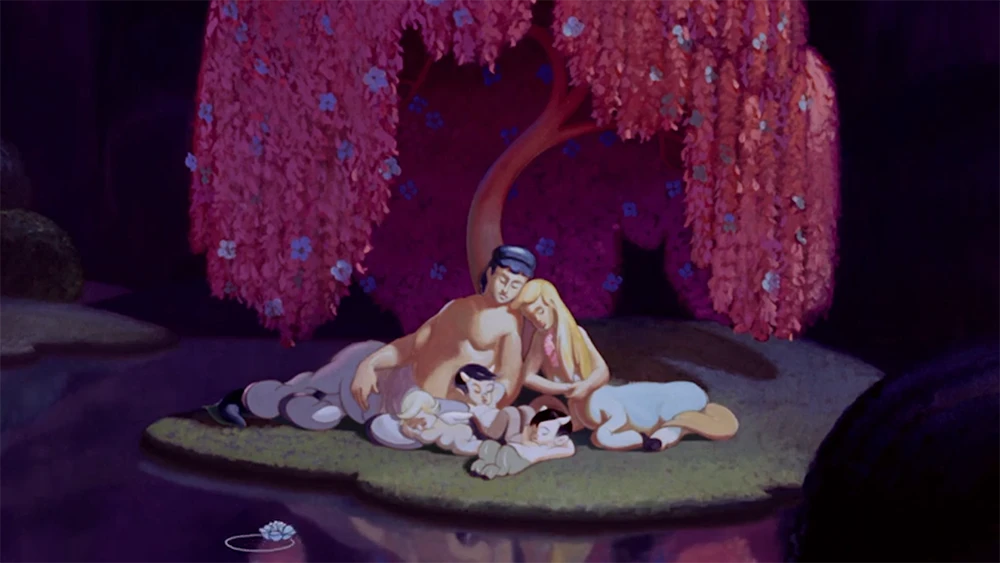
Artistry and Beauty in Disney’s Fantasia

Artistry and Beauty in Disney’s Fantasia, image 3
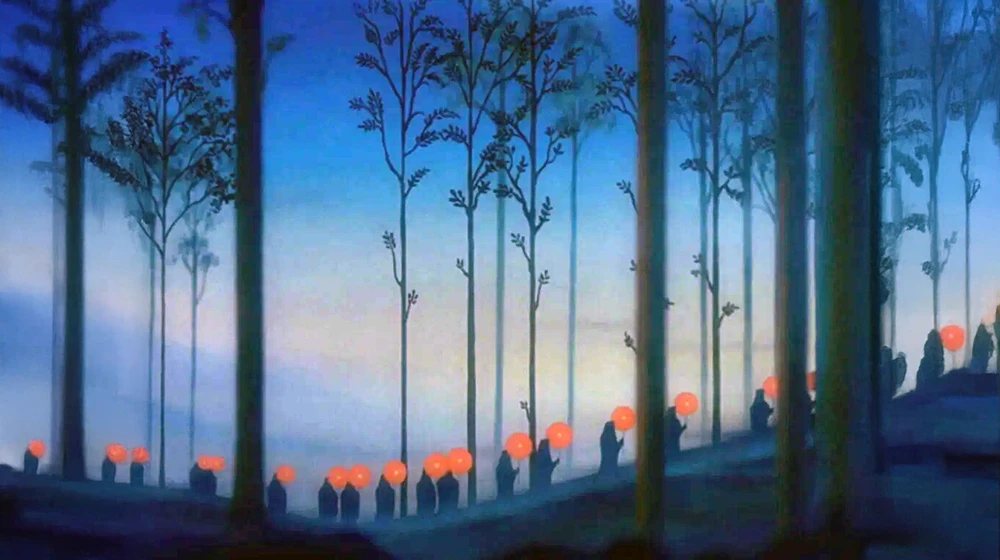
A sacred march accompanied by Schubert's Ave Mari
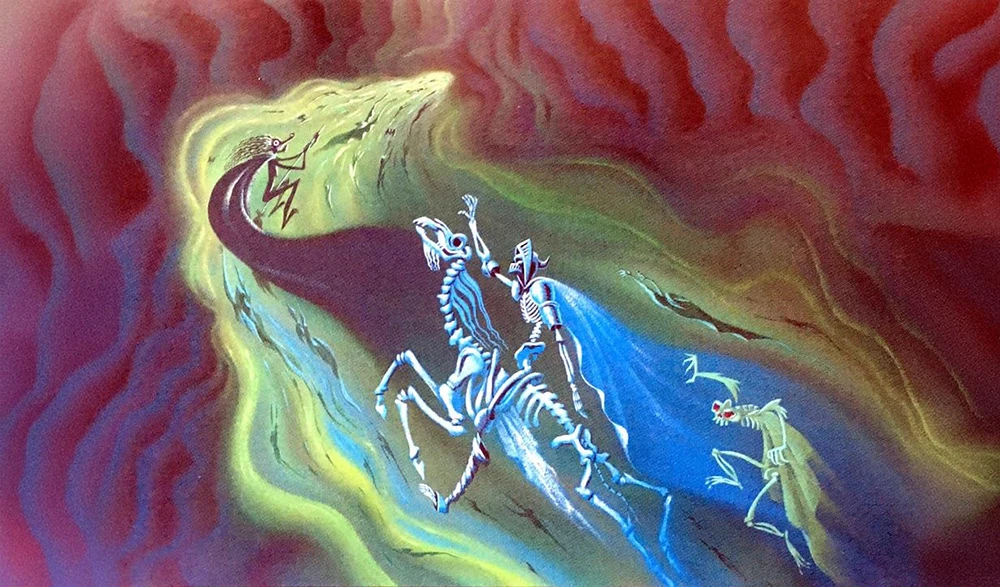
Night on Bald Mountain
One of the most iconic and darkest scenes in the film Fantasia, characterized by its dramatic atmosphere and the appearance of skeletal and demonic figures. The demon Chernabog summons evil spirits and creatures of the night upon Bald Mountain.
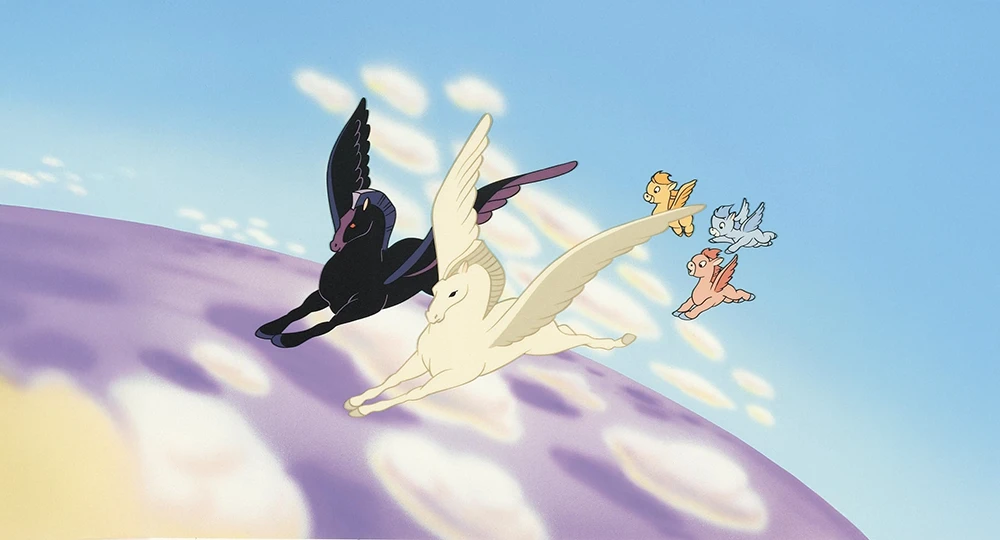
A classically inspired family of winged horses
Pegasus, the winged horse from Greek mythology, along with his family—including his mate and their foals. They appear in the segment set to the music of Beethoven’s Sixth Symphony, the Pastoral.
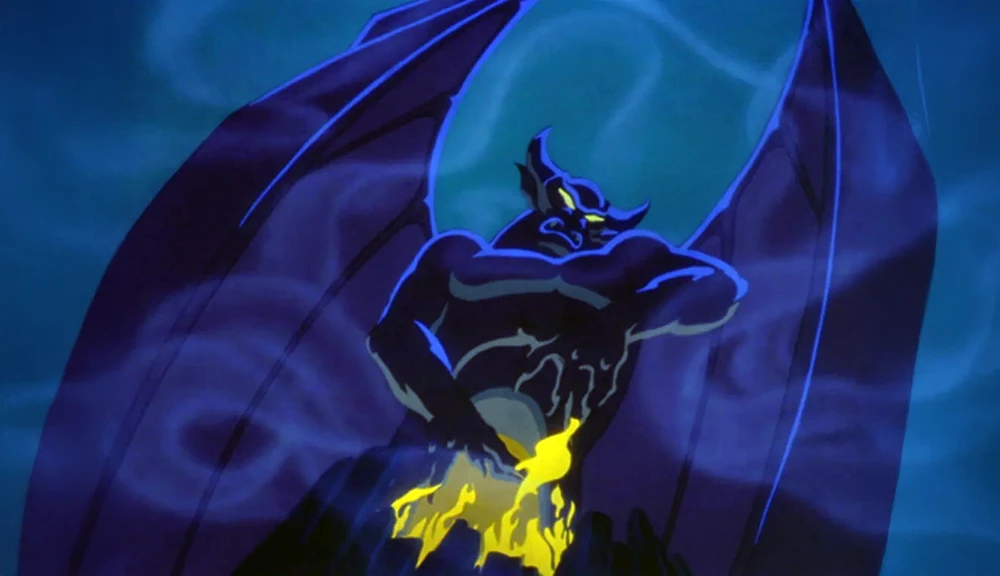
Chernabog: the giant and evil demon
Chernabog appears in the Night on Bald Mountain/Ave Maria segment. He is considered the film's primary villain and is based on Chernobog, the god of night in Slavic mythology.
Sensory Synesthesia in Fantasia: When Music is Seen and Color is Heard

Fantasia is, in essence, a cinematic experiment that attempts to convey the synesthetic experience to the viewer: that neurological phenomenon in which the stimulation of one sense simultaneously triggers the involuntary perception of another.
In people with synesthesia, a chord may ‘glow’ emerald green, a kettledrum may feel like a purple heartbeat, or a high note may be painted yellow. Walt Disney and his team started from this very same premise: to make visible what is heard and to give sound-based form to what is seen.
-
Music Transformed into Color and Form
-
In Bach’s Toccata and Fugue, beams of light and abstract foliage emerge and dissolve following the orchestral pulse, as if sounds were coloring themselves before our very eyes.
-
The movement of the brushstrokes coincides with the score’s dynamics: viewers ‘see’ crescendos and ‘feel’ silences within the darkness of the screen.
-
-
Narrating without words, through sensations alone.
-
Segments like The Rite of Spring feature volcanic eruptions and dinosaurs to the rhythm of Stravinsky’s percussion, associating visual textures with musical intensity.
-
The hippopotamus ballet in Dance of the Hours plays with the lightness of the string instruments: the ear anticipates every pirouette, and the eye ‘hears’ every pizzicato.
-
-
Fantasound: A Multisensory Bridge
-
The four-channel stereophonic sound system enveloped the audience and reinforced the illusion that the orchestra occupied the physical space of the theater. This auditory immersion amplifies the correspondence with the visuals, drawing even closer to the synesthetic experience.
-
-
A Learned, Not Innate, Synesthesia
-
Although most viewers do not have neurological synesthesia, the film invites them to ‘learn’ new sensory associations: to hear a bassoon and think of fairies, or to see red flashes and ‘feel’ a fortissimo. In this process, Fantasia turns the audience into temporary synesthetes.
-
Thus, Fantasia demonstrates that synesthesia can transcend individual neurology and become shared art. By fusing music, color, rhythm, and visual narrative, the film offers a sensory journey where our senses intertwine, reminding us that sound can be painted and light can dance to the beat of an orchestra.


Essential Technical Specifications: Fantasia (Walt Disney, 1940)
| Título original | Fantasia |
| – | – |
| Release Year: | November 13, 1940 (Roadshow premiere in New York) |
| Country | United States |
| Running Time | 124 min (Roadshow version) · 115 min (1946 re-release version) |
| Producer | Walt Disney |
| Segment Direction | James Algar · Samuel Armstrong · Ford Beebe Jr. · Norman Ferguson · T. Hee · Wilfred Jackson · Hamilton Luske · Bill Roberts · Ben Sharpsteen |
| Narrator | Deems Taylor (inter-segment presentations) |
| Musical Direction & Orchestration | Leopold Stokowski – The Philadelphia Orchestra |
| Musical Selection | Bach · Tchaikovsky · Dukas · Stravinsky · Beethoven · Ponchielli · Mussorgsky · Schubert |
| Animation Supervisor | Hamilton Luske |
| Art Direction / Color | Albert Hurter · Lee Blair · Mary Blair · Ham Luske (synesthetic palette) |
| Cinematography & Format | Three-strip Technicolor · Multiplane camera · 1.33:1 Aspect Ratio |
| Original Sound | Fantasound (4 stereophonic optical tracks, precursor to surround sound) |
| Studio | Walt Disney Productions (Burbank, California) |
| 1940 Distribution | Walt Disney–RKO Road-Show Corporation |
| Budget | ≈ $2.28 million USD (colossal for its time) |
| Key Awards | 2 Honorary Academy Awards (1942) for sound advancement and cultural contribution · National Film Registry selection (1990) |
| Major Re-releases | 1946 · 1956 (Perspecta Stereo) · 1969 · 1977 (Dolby Stereo) · 1982 (digital soundtrack) · 1990 (4K restoration) · 2010 (HD Blu-ray) · 2020 (Disney+ 4K HDR) |
Fantasia 2000
-
Year: 1999 (IMAX) / 2000 (Global release)
-
Format: 70 mm IMAX · 6-channel audio + Dolby Digital 5.1
-
New Segments: Beethoven, Respighi, Gershwin, Shostakovich, Saint-Saëns, Elgar, Stravinsky
-
Animation Directors: Hendel Butoy, Eric Goldberg, Gaëtan Brizzi, Paul Brizzi, etc.
Fantasia 2000 materialized Walt Disney’s dream of continuously ‘reviving’ his masterpiece for every generation of dreamers and lovers of beauty.
Its Contribution to Animation History
Fantasia merged animation, color, and classical music like no film before it, premiered the Fantasound multi-channel sound system, and established the idea of a ‘living film’ that could be expanded with new segments—the seed for Fantasia 2000 (1999), which would update the concept with IMAX and Dolby Digital 5.1.