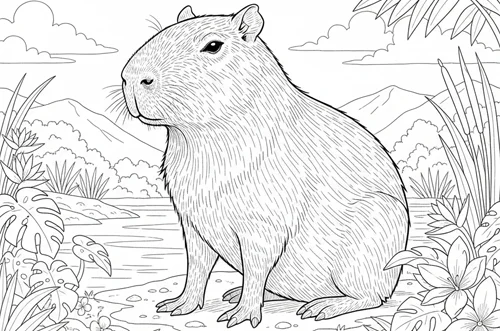




Did you know that the capybara is the friendliest animal in the world? It even gets along with crocodiles! Now you can add your personal touch to the internet’s most famous ‘carpincho’ with our exclusive collection of drawings, ready to download.
Capybara Coloring Pages: The cutest rodent on your paper!
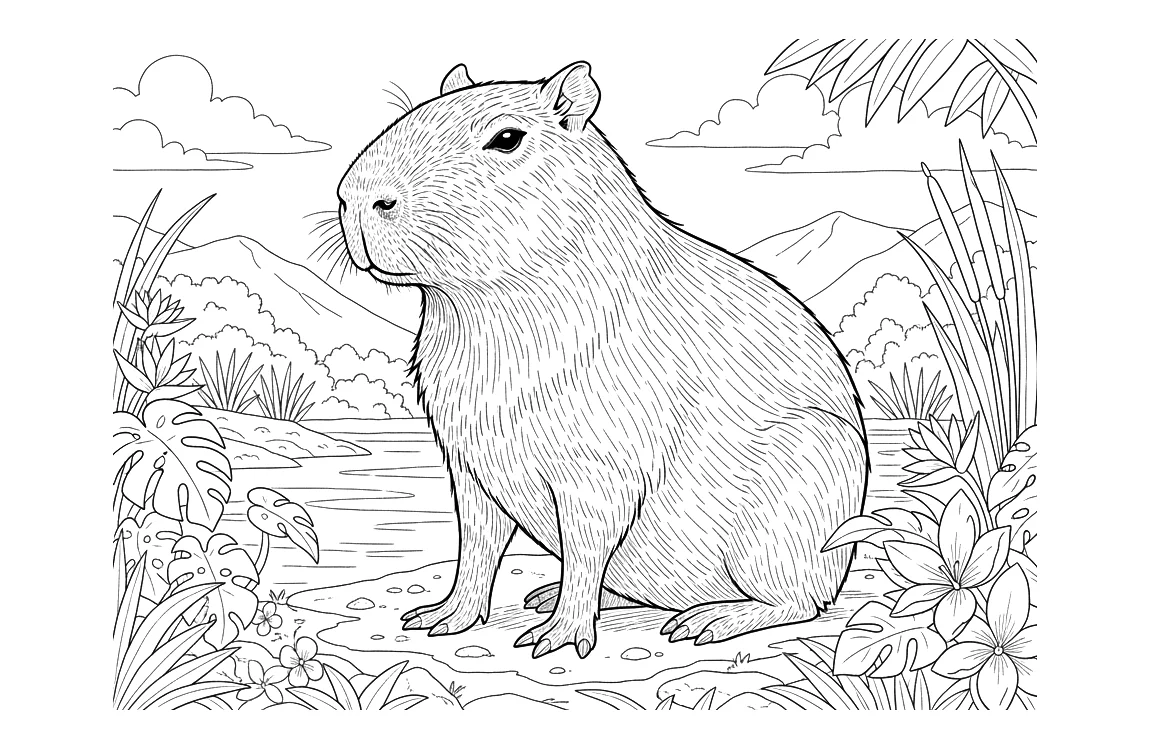
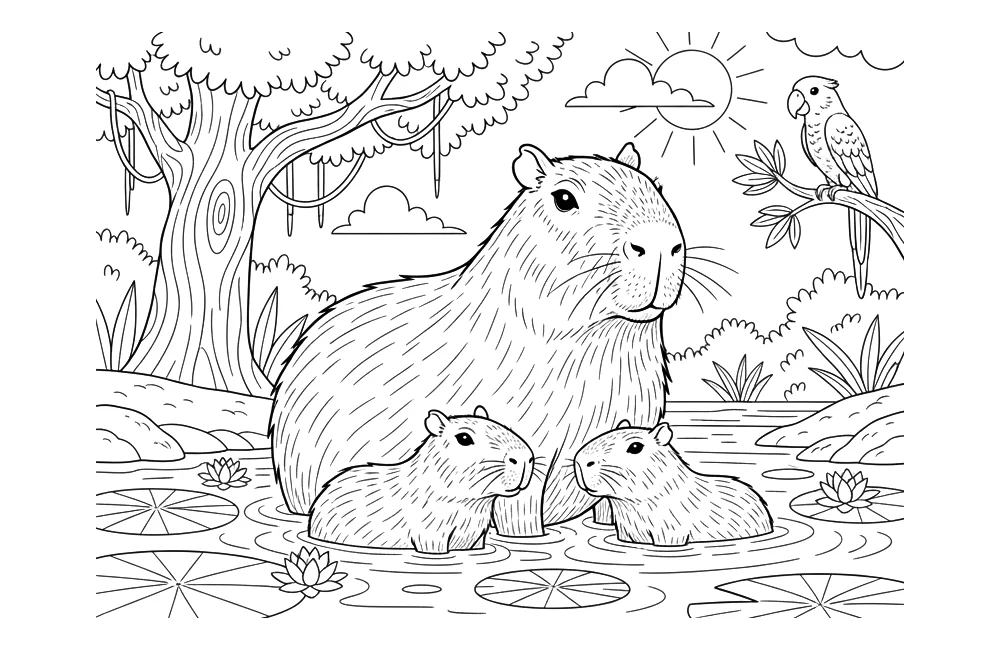
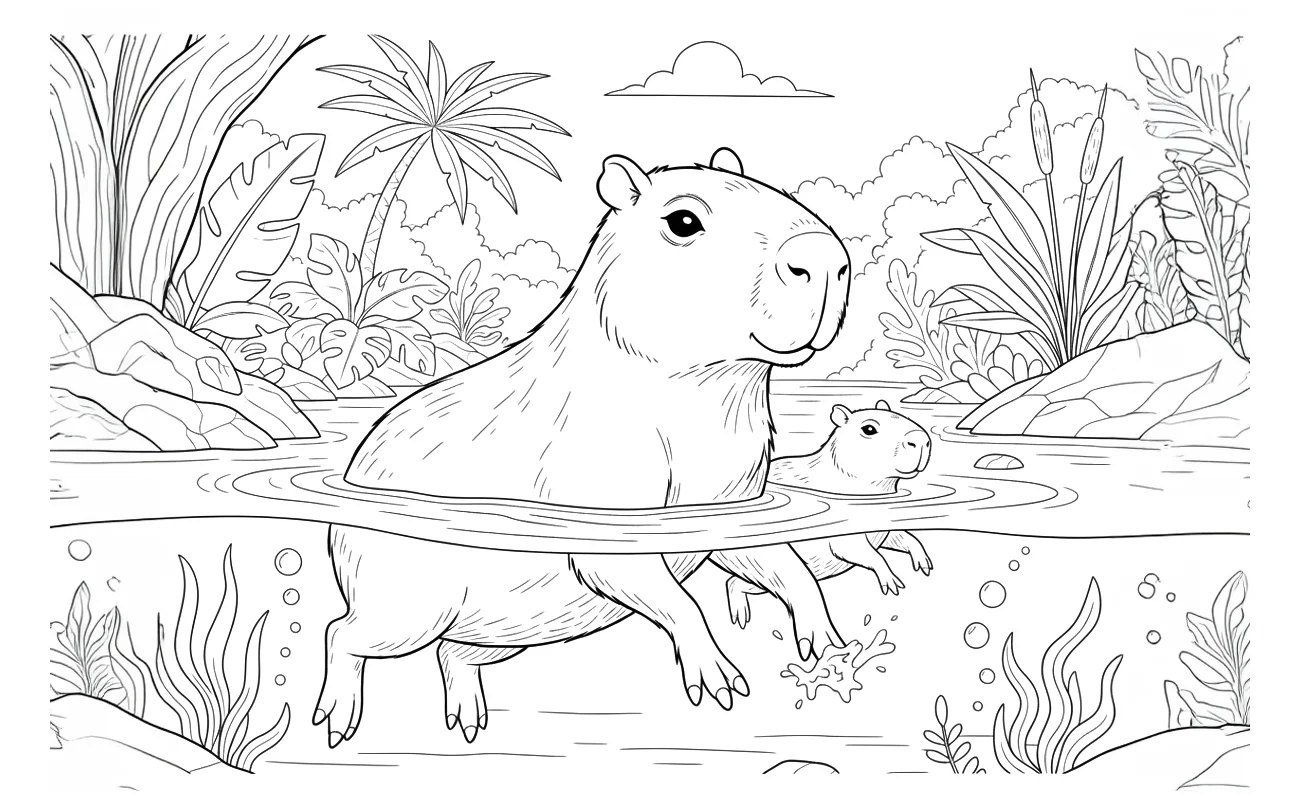
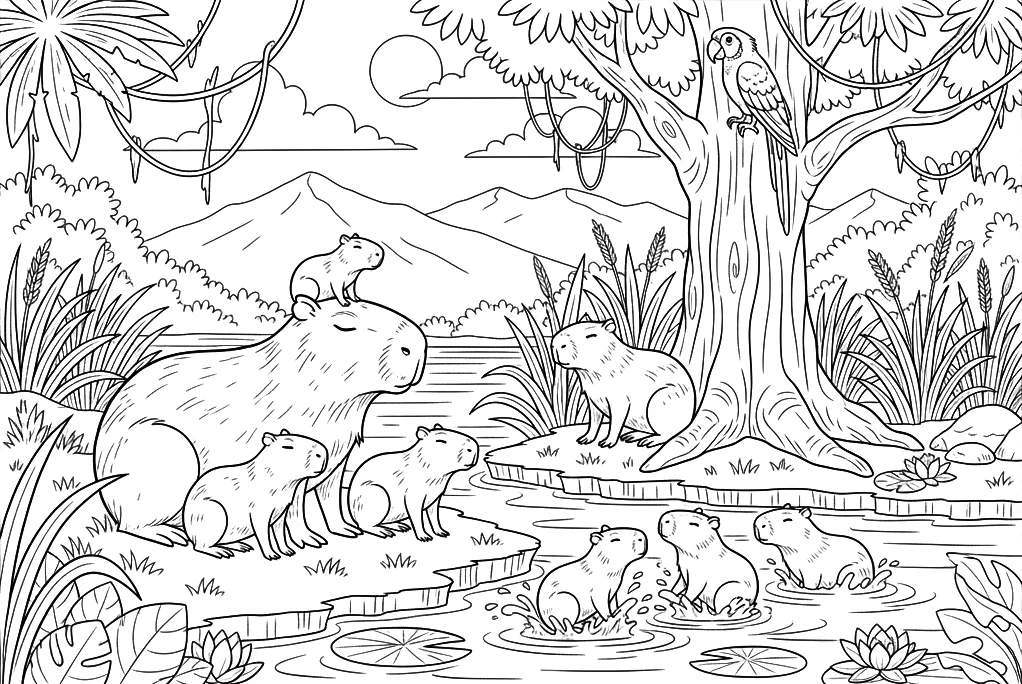
If you are a fan of these peaceful South American animals, you have come to the right place. In this section, we offer a complete gallery of capybara coloring pages, designed with clear lines and fun details. Capybaras, also known as ‘carpinchos’ or ‘chigüires’, have become an icon of calm and friendship. Our collection ranges from capybaras relaxing in the water to fun scenes with their pups—all ready for you to print at home, completely for free.
Download and print your high-resolution capybara templates
Our capybara line art sheets are optimized for a perfect coloring experience, whether for young children or adults seeking a moment of relaxation. Coloring capybaras is a fantastic activity to learn about Amazonian wildlife while developing creativity.
To get started, simply select the image you like best, download it, and print it in A4 size. We recommend using shades of brown and tan for their fur, but don’t forget that in the world of art, your capybara can be all the colors of the rainbow!


All About the Capybara: The Gentle Giant of the Animal Kingdom
The capybara (Hydrochoerus hydrochaeris), also known in various regions as ‘carpincho’, ‘chigüire’, or ‘poncho’, is an animal that has conquered the internet thanks to its relaxed temperament. But beyond the memes, this mammal is a key player in South American ecosystems and possesses fascinating biological characteristics.
What kind of animal is the capybara?
Although its size might suggest otherwise, the capybara is a rodent. In fact, it is the largest rodent in the world. It belongs to the Caviidae family, which means it is a close relative of the popular ‘guinea pigs’, even though an adult capybara can weigh up to 65 kilos and reach 1.30 meters in length.
As a mammal, it is a warm-blooded animal, breathes through lungs, and nurses its young, which are born highly developed and ready to walk within just a few hours.
Origin and Evolution: A Millennial Survivor
Capybaras have inhabited our planet for millions of years. Their ancestors originated in Africa and arrived in South America approximately 40 million years ago, evolving to adapt to the wetlands of the American continent.
During prehistory, there were relatives of the capybara that were even larger, the size of a bear. The species we know today has perfected its anatomy to be a semi-aquatic creature, keeping its eyes, ears, and nose on the top of its head to see and breathe while the rest of its body is submerged.
Natural habitat: Where do capybaras live?
The capybara is a citizen of South America. It can be found in almost every country on the continent (except Chile), from Panama to northern Argentina.
Its life revolves around water. Its preferred habitats include:
-
Marshes and swamps.
-
Riverbanks and lakeshores.
-
Flooded savannas (such as the Llanos of Venezuela and Colombia).
-
Tropical rainforests.
They need water not only for drinking, but also to regulate their body temperature and to protect themselves from predators such as the jaguar or the anaconda.
Diet: What does a capybara eat?
Capybaras are strict herbivores. Their diet is primarily based on:
-
Aquatic grasses: These are their favorites due to their high water content.
-
Grasses and reeds: They spend a large part of the day grazing on the riverbanks.
-
Tree bark and fruits: They occasionally supplement their diet with whatever they find in the forest.
Fun fact: Their teeth never stop growing. Like other rodents, they need to constantly wear them down by chewing on fibrous plants to prevent them from overgrowing.
Lifestyle and social behavior
If there is one thing that defines the capybara, it is its sociability. They are extremely gregarious animals that live in groups of between 10 and 30 individuals, though during dry seasons, congregations of up to 100 have been seen gathered around a single water source.
-
Hierarchy: Groups are usually led by a dominant male.
-
Communication: They communicate through a wide range of sounds including whistles, grunts, alarm barks, and even purrs when they are calm.
-
Napping and Relaxation: They are crepuscular animals; they prefer to rest during the hottest hours and become active at dawn and dusk.
Population and Global Distribution
Unlike other exotic animals, the capybara is not in danger of extinction. It is classified as a species of ‘Least Concern’ by the IUCN (International Union for Conservation of Nature).
-
How many are there?: It is impossible to give an exact figure due to the vastness of their territory (the Amazon, the Pantanal, the Llanos), but it is estimated that there are millions of individuals distributed throughout the continent.
-
“Highest density areas: The Brazilian Pantanal and the Llanos of Colombia and Venezuela are the regions where they are easiest to spot in the wild. Recently, they have become famous for colonizing luxury urban areas in Argentina, such as Nordelta, reclaiming what were originally their wetlands.
Did you enjoy learning about them? Now that you know all their secrets, it’s time to add color! Elige uno de nuestros dibujos de capibaras para colorear y utiliza verdes para el agua y marrones cálidos para su espeso pelaje.
Download these colorful capybara illustrations

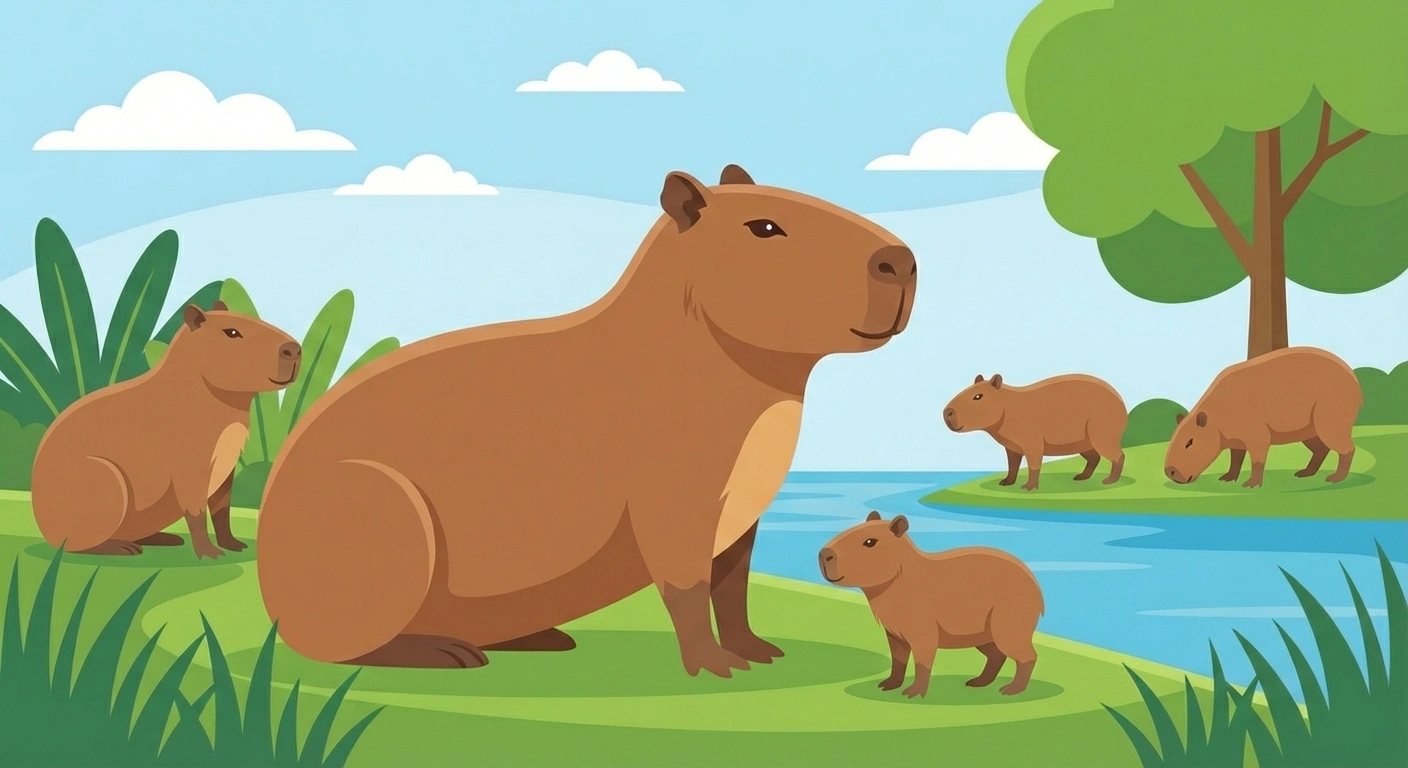




The Capybara Story Collection: Discover the most curious tales of this friendly animal.