



Hanna-Barbera History
Hanna-Barbera, one of the most influential animation studios in history, redefined television through its iconic cartoon series. Founded in 1957 by William Hanna and Joseph Barbera, the studio pioneered some of the world’s most beloved and enduring entertainment franchises. From The Flintstones to Scooby-Doo, its legacy remains a cornerstone of modern animation.

🎬 Hanna-Barbera Special: Table of Contents
- The History of Animation Series: Hanna-Barbera Episode
- The History of Animation Series: Penelope Pitstop, One of Hanna-Barbera’s Most Iconic Characters created for Wacky Races
- The Founders: William Hanna & Joseph Barbera
- Hanna-Barbera Downloadable Gallery
- The Birth of the Hanna-Barbera Animation Studio
- The Most Iconic Series by Hanna-Barbera
- The Most Iconic Characters of Hanna-Barbera
- The Impact of Hanna-Barbera on Popular Culture
If you are passionate about cartoons and the history of animation in general, visit our YouTube channel. here. Follow us on social media to stay up to date with our latest content and join us on this journey through the world of animation.

If you are passionate about cartoons and the history of animation in general, visit our YouTube channel. here. Follow us on social media to stay up to date with our latest content and join us on this journey through the world of animation.
The Founders: William Hanna & Joseph Barbera
William Hanna and Joseph Barbera began their partnership in 1937 at Metro-Goldwyn-Mayer (MGM) with the creation of Tom and Jerry, a series of short films that earned seven Academy Awards. After MGM closed its animation studio in 1957, the duo founded Hanna-Barbera Productions, which quickly became a leader in television animation.


Hanna-Barbera Downloadable Gallery

Characters Created by Hanna-Barbera

Personajes protagonistas de Los Picapiedra

Augie Doggie and Doggie Daddy

A still frame from an episode of The Yogi Bear Show.

Hanna-Barbera presents The Impossibles, a series produced in 1966 and broadcast on CBS. The Impossibles were a trio of young rock 'n' roll musicians who were actually crime-fighters; they possessed superpowers and were dedicated to battling evil supervillains.

Top Cat is an animated series consisting of thirty episodes. It was produced by Hanna-Barbera in 1961.

Top Cat and his gang in the alley. The cats Brain, Fancy-Fancy, Choo-Choo, and Spook are pictured alongside Top Cat.

Top Cat is a thirty-episode animated TV series created and produced by Hanna-Barbera in 1961. It aired in Prime Time on the ABC network in the United States, premiering on September 27, 1961
The Birth of the Hanna-Barbera Animation Studio
In 1957, with a limited budget and a bold vision to bring animation to television, Hanna and Barbera launched The Ruff and Reddy Show, their studio’s first major hit. This was just the starting point for a legendary lineup of creations that would define the television landscape throughout the second half of the 20th century.
Innovation and Production Techniques: The Hanna-Barbera Legacy
Hanna-Barbera is renowned for its innovative approach to animation, particularly for pioneering the ‘limited animation’ technique. This method allowed the studio to produce series at a rapid pace while significantly reducing costs by decreasing the number of drawings per second and reusing backgrounds and sound effects. Although sometimes criticized for its simplicity, this groundbreaking methodology enabled the studio to produce an impressive volume of television episodes that reached audiences worldwide.
The Most Iconic Series by Hanna-Barbera
Throughout the 1960s and 1970s, Hanna-Barbera produced some of the most beloved shows in television history. Some of their most standout series include:
-
The Flintstones (1960) The first animated prime-time sitcom, featuring television’s most famous prehistoric family. Its unique blend of humor and everyday situations turned the show into a cultural landmark.
-
Scooby-Doo, Where Are You! (1969) A group of teenagers and their Great Dane, Scooby-Doo, solving mysteries in a format that remains incredibly popular to this day.
-
The Jetsons (1962) Set in a futuristic world, this series showcased the lives of the Jetson family, accurately predicting many modern technological advances such as video calls and domestic robots.
-
Jonny Quest (1964) A groundbreaking action-adventure series that featured a more realistic art style. It targeted a teen audience with a strong focus on high-stakes action and global exploration..
-
Top Cat (1961) Set in the city streets, this animated sitcom follows a gang of alley cats. It stood out for its sharp urban humor, clever storylines, and deeply endearing characters.
-
Wacky Races (1968) An outrageous racing competition featuring a zany cast of characters and their fantastical vehicles. The show’s massive popularity inspired numerous spin-offs and modern reboots.
-
The Yogi Bear Show (1961) Centering on a bear with an endless passion for stealing ‘picnic baskets’ and outsmarting the park ranger, Yogi became one of the most iconic figures of animation’s golden age.
-
Touché Turtle and Dum Dum (1962) The story of a brave turtle who dreams of being a musketeer. This series perfectly blended swashbuckling adventure with clever comedy as he fought for justice with his loyal companion.
-
The Magilla Gorilla Show (1964) A friendly and somewhat clumsy gorilla living in a pet shop window, Magilla became one of the most endearing characters of the era. His gentle nature and constant search for a forever home captured the hearts of audiences everywhere
The Most Iconic Characters of Hanna-Barbera
The Hanna-Barbera animation studio has created unforgettable characters that are now deeply woven into the fabric of popular culture. Here are the most prominent figures that defined an era:
-
PENELOPE PITSTOP (1968)
Originally introduced in Wacky Races, Penelope Pitstop became a breakout star with her own spin-off. She is remembered as a stylish yet daring adventurer who combined glamour with incredible skill behind the wheel, defying the typical tropes of the era and becoming a pioneer for female characters in animation.
Sporting her signature pink pillbox helmet and ‘sixties’ scarf, she was the only female driver among the eleven racers in Wacky Races. She redefined the racing world by maintaining her signature elegance while driving at top speeds.
Wacky Races brought together eleven vehicles and their eccentric drivers—including Penelope Pitstop—as they raced across the United States in wild, unpredictable stages. The ultimate prize: the Wacky Races Trophy and the title of ‘World’s Wackiest Racer.’ Each episode featured Dick Dastardly’s underhanded traps, impossible shortcuts, and nail-biting photo finishes; with audiences rooting for their favorites, the only constant was the frantic, non-stop fun
In 1969, she starred in her own 17-episode spin-off, The Perils of Penelope Pitstop. In this series, her guardian, Sylvester Sneekly, leads a double life as the sinister ‘Hooded Claw,’ a masked villain obsessed with claiming her fortune and inheritance
In this spin-off, the action shifted from racing to a parody of silent movie serials. In every episode, The Hooded Claw devised elaborate traps—from buzzsaws and railroad tracks to hot air balloons—to seize Penelope’s fortune. While the gangster group ‘The Ant Hill Mob’ always rushed to her rescue, the comedic twist was that Penelope often saved herself. Using her wit and beauty-themed gadgets like her laser-lipstick, and her legendary cry of ‘Help, Help!’, she frequently outsmarted the villain before the final gong sounded.
A pop icon of the psychedelic era, Penelope proves that with style and wit, any race can be won.
Created by the Hanna-Barbera duo and designed by Iwao Takamoto and Jerry Eisenberg in 1968, Penelope Pitstop debuted in Wacky Races as a direct response to the lack of female drivers in the lineup.
Although she appeared to be a damsel in distress, the writers designed Penelope as both a parody and a statement: she consistently saves herself, invents clever tricks with her makeup, and never loses her cool. In doing so, she became a precursor to the modern female hero.
In Brazil, she is famously known as ‘Penélope Charmosa.’ Her popularity there was so immense that the series featured a catchy opening theme song—’Lá lá lá, Penélope Charmosa!’—which Brazilian fans still hum today as a nostalgic anthem.
With her signature pink palette and mod sass, Penelope behind the wheel is what Twiggy was to the catwalk: a pop emblem that perfectly encapsulates the spirit of the Swinging Sixties.
Decades later, Warner Bros. Animation revived the franchise with the Wacky Races series (2017–2019) for Boomerang. Penelope returned to the driver’s seat, voiced by Nicole Parker, featuring a digital design that honors her classic ‘sixties’ features. From a vintage 1960s heroine to a 21st-century CGI racer, Penelope proves that true style never goes out of fashion.
Penelope Pitstop: Elegance at 200 km/h and nerves of steel.

Penélope Glamour or Penélope Pitstop, character created by Hanna-Barbera

Penelope Pitstop in her car, the No. 5 Compact Pussycat.

Penelope Pitstop: the most stylish driver in Wacky Races

Penelope Pitstop receiving the Wacky Races Cup trophy.

Penelope Pitstop wearing her ‘pillbox’ helmet and ‘sixties’ scarf.

Penelope Pitstop in one of her Wacky Races adventures.

The interior of Penelope Pitstop’s car, packed with beauty gadgets.

A scene from an episode of Wacky Races

Opening credits of the spin-off series The Perils of Penelope Pitstop.

The Hooded Claw seeks to claim Penelope Pitstop’s inheritance
-
Format Innovation: Hanna-Barbera pioneered the creation of 30-minute animated series, marking a major breakthrough in an era dominated by short-form cartoons.
-
The First Emmy: The Flintstones was the first animated series to be nominated for a Primetime Emmy Award in 1961.
-
Hanna-Barbera pioneered the ‘Limited Animation’ technique, producing an average of 26 episodes per season. This industrial efficiency allowed them to define the ‘Saturday Morning Cartoon’ era in the United States, a model that was later exported to every television market in the world.
-
The Turner Merger: In 1991, Ted Turner acquired Hanna-Barbera, a move that paved the way for the creation of Cartoon Network. The channel became the ultimate home for the studio’s vast library and a powerhouse for new generations of animated hits.
The Impact of Hanna-Barbera on Popular Culture
Hanna-Barbera left an indelible mark on popular culture, creating characters that remain benchmarks in films, comics, merchandising, and beyond. Their series were adapted into various formats, including theme parks, video games, and spin-off products. Furthermore, the brand remained relevant even after its 1996 acquisition by Warner Bros., with new projects like The Powerpuff Girls and Dexter’s Laboratory adding to the enduring Hanna-Barbera legacy.
Legacy and Reinvention
In 2021, WarnerMedia rebranded Cartoon Network Studios Europe as Hanna-Barbera Studios Europe, aiming to revitalize the studio’s legacy with new projects. Their plans include producing new series inspired by Hanna-Barbera classics, ensuring the studio’s magic lives on for future generations.

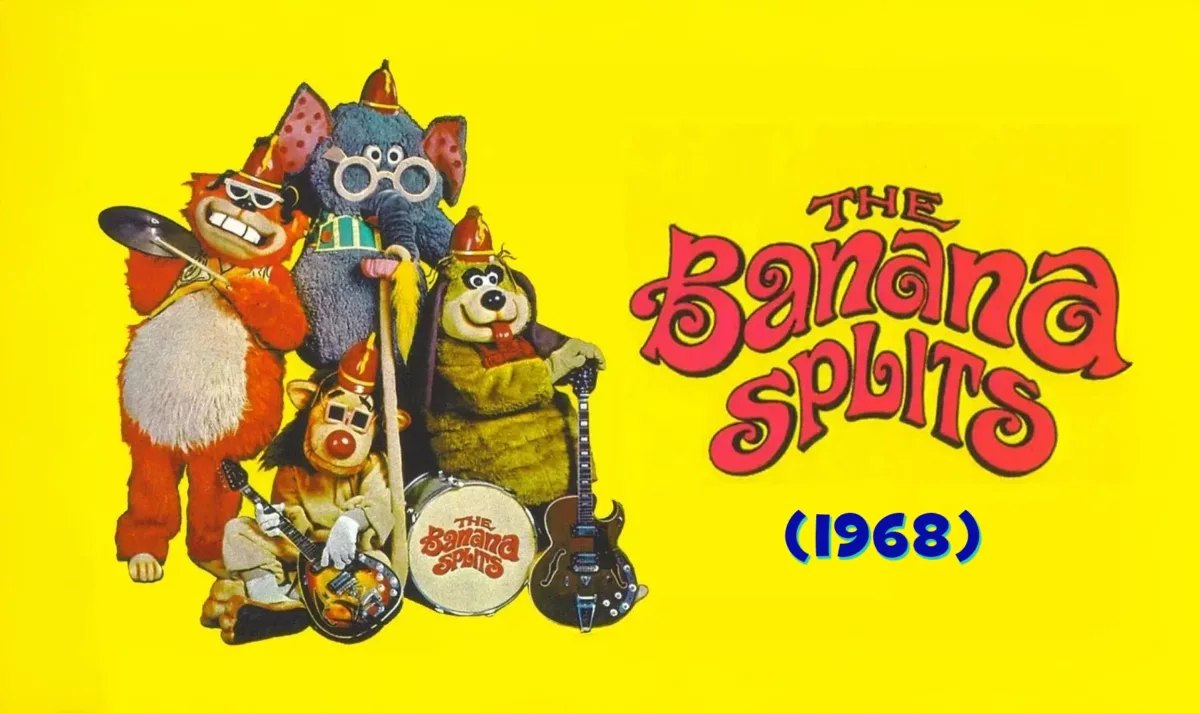
The Banana Splits Adventure Hour, a 1968 television series.

What's New, Scooby-Doo?, an animated television series.

Beast Boy: Lone Wolf, one of the latest series from Cartoon Network and a testament to the Hanna-Barbera legacy.
“Hanna-Barbera not only revolutionized animation but also left a mark that remains a cornerstone of global entertainment. With its legacy intact, the studio continues to be a benchmark for animators and content creators worldwide. Through its innovative approach and ability to create timeless characters, Hanna-Barbera forever changed television and the art of animation.