


Rigging: The Key Technique in 2D and 3D Animation

3D rigging software being used on a computer.
Introduction: What is Rigging in Animation?
Rigging is an essential technique in 3D animation that allows characters to move—whether realistically, with exaggerated cartoon mechanics, or anything in between. Rigging techniques are also widely used in 2D animation. The process involves creating a virtual skeleton, or “rig,” that controls the joints and movements of a 3D or 2D model, much like how biological bones control human body movement. Thanks to rigging, animators can manipulate characters, creatures, and props in intricate detail, ranging from basic limb movements to complex facial expressions.
It is important not to confuse “rigging in animation” with “event rigging”—the latter refers to assembling temporary structures, lighting grids, and stage equipment using cables, pulleys, cranes, and structural hardware.
Origin and History of Rigging
Rigging began to take shape during the 1980s alongside early advancements in computer graphics (CGI). Early 3D experiments relied on basic geometric transformations, but it wasn’t until Pixar’s Toy Story (1995) that character rigging became a cornerstone industry technique for giving life to digital characters with natural, fluid, and expressive motion.
The word “rigging” originates from nautical terminology, referring to the system of ropes, chains, and pulleys used to maneuver sails on a ship. Similarly in digital animation, the rig “secures” and “drives” the character mesh so it can function efficiently.
Milestones in the History of Rigging
- 1
Toy Story (1995): One of the earliest 3D feature films where digital character rigging enabled fluid, believable movement for fully computer-generated leads.
- 2
Gollum in The Lord of the Rings Trilogy (2002–2003): Driven by an advanced facial and body rig, Gollum set a historical precedent for combining performance capture data with refined keyframe rigging adjustments.
- 3
Avatar (2009): James Cameron used a revolutionary combination of facial rigging and performance capture to drive the Na’vi, setting new standards for lifelike motion in visual effects.
- 4
Frozen (2013): Intricate custom character rigs for Elsa and Anna allowed for complex simulation controls handling hair, cloth deformation, and subtle facial micro-expressions.
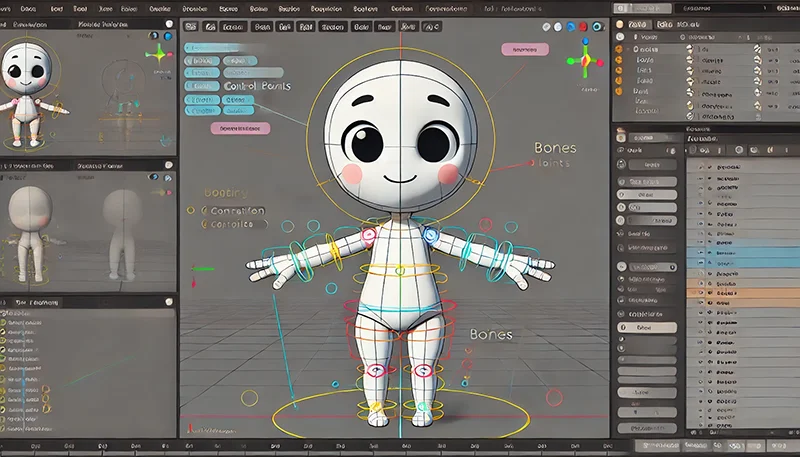
This image illustrates how character rigging works in practice. It showcases a 3D character equipped with control curves and motion-assigned weighting points, as seen in industry-standard 3D animation software with dedicated rigging toolsets like Blender or Maya.
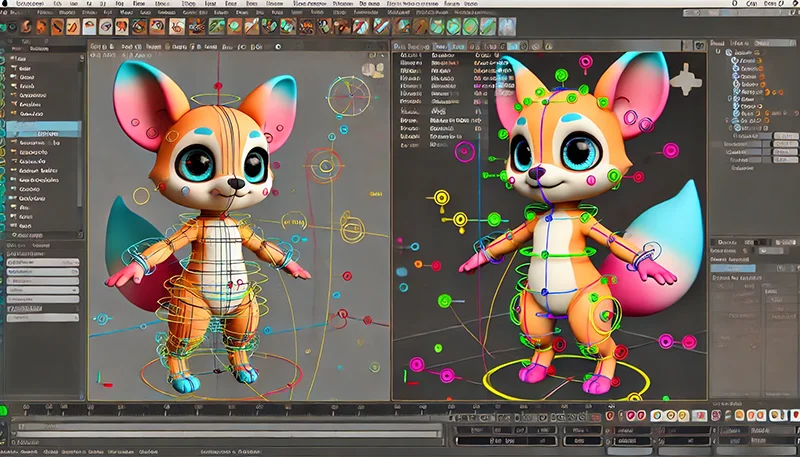
Rigging is a fundamental, non-negotiable technique in modern 3D animated feature films.
The Rigging Process
The rigging process involves several precise technical stages, which typically include:
- 1
Skeleton Construction: Creating the virtual bone hierarchy that defines articulable joint locations.
- 2
Skinning Application: Binding the 3D surface mesh to the skeletal bones so the digital “skin” deforms naturally as joints rotate.
- 3
Control Rig Setup: Adding user-friendly control handles (curves and inverse kinematics) for detailed manipulation of complex areas like hands and facial features.
- 4
Testing and Refinement (Paint Weights & Pose Reading): Stress-testing joint limits, fixing mesh intersections, and refining muscle deformations to match the animator’s needs.
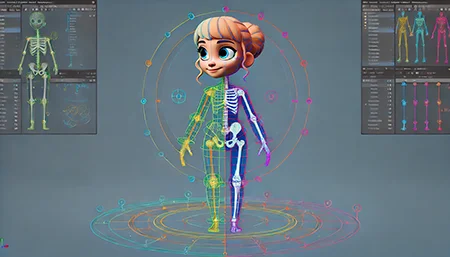
The Rigging Process, Stage 1: Skeleton Construction (Bone Hierarchy Creation): Building the virtual bone system that forms the underlying structure and supports character movement.
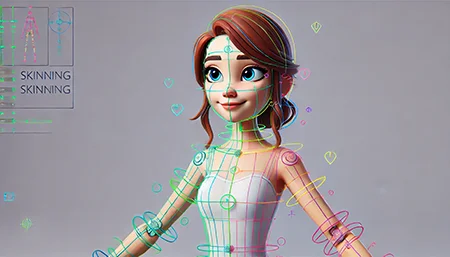
The rigging process, Stage 2: Skinning application — Binding the 3D model (the skin) to the skeleton so that movements reflect accurately.
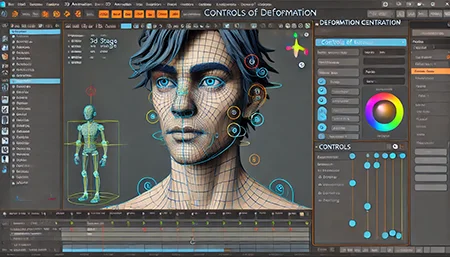
The rigging process, Stage 3: Deformation controls — Implementing detailed controls to handle precise movements such as facial expressions and body flexing.
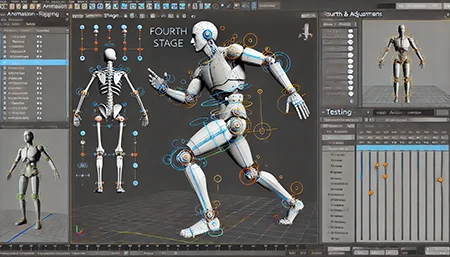
The rigging process, Stage 4: Testing and adjustments — The final phase where movements are tested and necessary refinements are made to ensure fluid, realistic motion.
Famous Movies and Series Featuring Advanced Rigging
Rigging has been a pivotal technique in countless iconic animated films and series, including:
Famous Rigging Artists
Riggers—though operating primarily behind the scenes—are essential architects in bringing iconic characters to life. Notable pioneers and leading technical directors in character rigging include:
Conclusion
What is rigging? Rigging is a foundational technical discipline in 3D animation that gives digital characters the structure needed to move naturally and expressively. From early milestones like Toy Story to groundbreaking modern productions like Avatar and Frozen, rigging continues to evolve, pushing the boundaries of realism, weight, and motion fidelity in character performance.

It is the technique used in both 2D and 3D animation to create a virtual skeleton that controls a character’s movements.
Rigging allows characters to move fluidly and naturally, making animations more believable. Therefore, it is vital in both 2D and 3D animation productions.
Some of the most popular tools in the animation industry are Autodesk Maya, Blender, Houdini, and 3ds Max.
We hope this guide answered your questions on what rigging is and how it powers modern character animation. To see this workflow in action, check out the tutorial video “Rigging in Blender 3D for Characters Step-by-Step” (in Spanish), which demonstrates a practical, entry-level character rig setup from start to finish.