



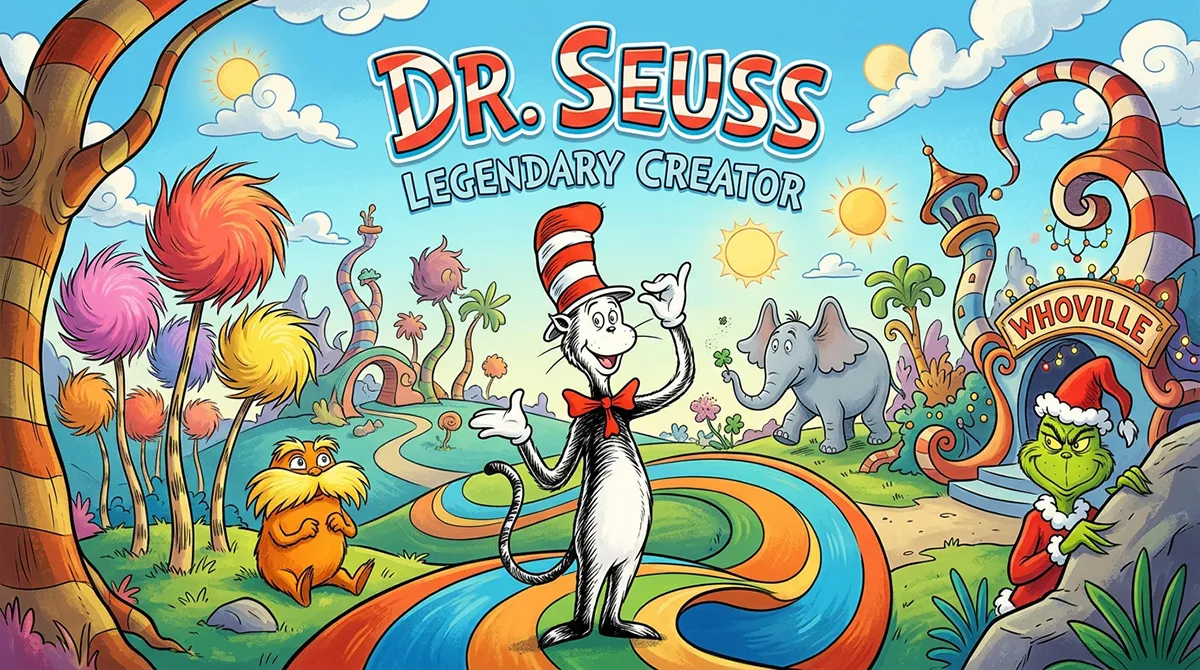
Dr. Seuss: The Architect of Nonsense and Creator of Immortal Icons
Theodor Seuss Geisel, known worldwide as Dr. Seuss, forever revolutionized 20th-century children’s literature, character design, and visual pedagogy. With an unmistakable style built on hypnotic rhymes, impossibly curved creatures, and an unbridled imagination, the American author transformed how children learn to read and how creators conceptualize a graphic universe.
In this inaugural article of the Legendary Creators section, we analyze the life, technique, pedagogical impact, and key character design principles behind the mind that brought us The Grinch, The Cat in the Hat, and The Lorax.
1. Biography and Origins: From Advertising to Children’s Literature
Born in Springfield, Massachusetts, in 1904, Theodor Seuss Geisel was neither a doctor of medicine nor of literature (he adopted the “Dr.” prefix as a humorous nod to his father’s unfulfilled wish for him to earn a doctorate at Oxford).
Before becoming America’s most famous children’s author, Geisel honed his visual and conceptual talents in the worlds of editorial illustration and commercial advertising:
- Advertising Impact: For over 15 years, he created massive campaigns for brands such as Flit (a popular insecticide), Ford, and Standard Oil. These strips and illustrations taught him a crucial lesson in visual communication: a character must be instantly recognizable and convey a clear emotion in less than a second.
- Wartime Propaganda and Animation: During World War II, he drew hundreds of political cartoons and worked in the U.S. Army’s film unit, where he collaborated with legendary animators like Chuck Jones (co-creating the character Private Snafu). This period sharpened his sense of sequential storytelling and dynamic pacing.
- The First Big Breakthrough: His first published book, And to Think That I Saw It on Mulberry Street (1937), was rejected by more than 20 publishers before finally seeing the light of day, marking the beginning of a legendary career.
2. Key Principles of Dr. Seuss’s Character Design
The visual language of Dr. Seuss is one of the most distinctive in the history of commercial art. His characters do not adhere to traditional anatomy or realistic physics, but rather to a unique set of formal principles:
A. The Complete Absence of Straight Lines
In the Seussian universe, right angles and rigid structures simply do not exist. Houses, trees, machines, and the bodies of his characters are all formed by fluid curves, organic arches, and elastic shapes. This visual fluidity provides constant dynamism: even when his characters are standing still, they appear to be in motion.
B. Minimalist yet Extremely Effective Expressiveness
Despite their surreal aesthetics, the faces of Dr. Seuss’s characters are masterclasses in non-verbal communication:
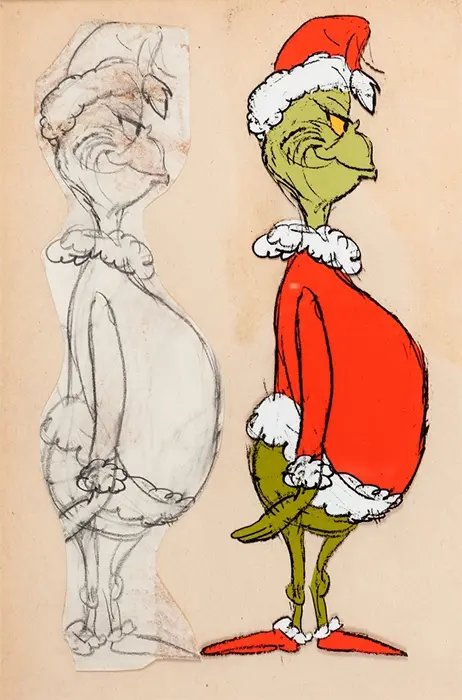
- Eyes and Eyebrows: A simple pair of dots combined with inverted V-shaped eyebrows transform The Grinch from a curious creature into a calculating villain
- Muzzles and Micro-smiles: His characters often feature elongated muzzles or soft beaks that allow for exaggerated gestures of surprise, disdain, or joy without distorting the overall facial structure.
C. The Animal Mind and Creative Anthropomorphism
Seuss rarely drew real animals. He preferred to invent hybrid species by combining traits of birds, mammals, and insects with human postures. This blend allowed readers to connect emotionally with fantastical characters without tying them to the limitations of a known wild or domestic animal.
3. Gallery of Icons: The Most Emblematic Characters
The Cat in the Hat (1957)
The catalyst of controlled chaos. Designed with a tall, slender, feline silhouette, adorned with his iconic red-and-white striped hat and a oversized bowtie. He represents pure mischief and a free spirit standing in contrast to the rigidity of the adult world.
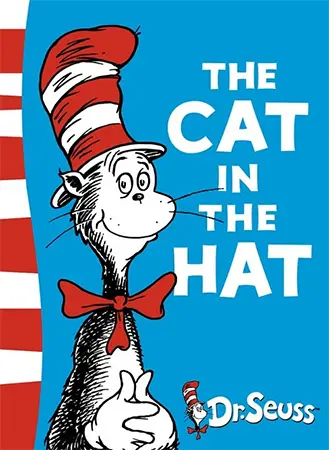
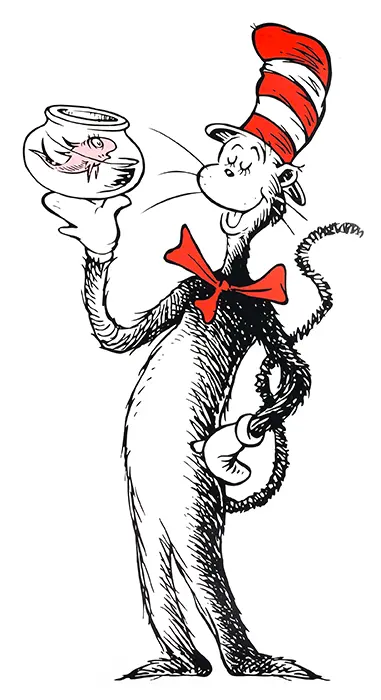
The character of The Cat in the Hat was created by American writer Theodor Seuss Geisel (known as Dr. Seuss) in 1957. He stars in the famous children's book The Cat in the Hat. He is a very tall, mischievous, and cheerful anthropomorphic cat (possessing human traits) who wears a red-and-white striped top hat and a red bowtie.
El Grinch (How the Grinch Stole Christmas!, 1957)
Initially illustrated in black and white with red accents in the original book (the green color was popularized by Chuck Jones’s 1966 animated adaptation), The Grinch is the archetype of the redeemed misanthrope. His slouching, furry silhouette stands in stark contrast to the sweetness of the inhabitants of Whoville.
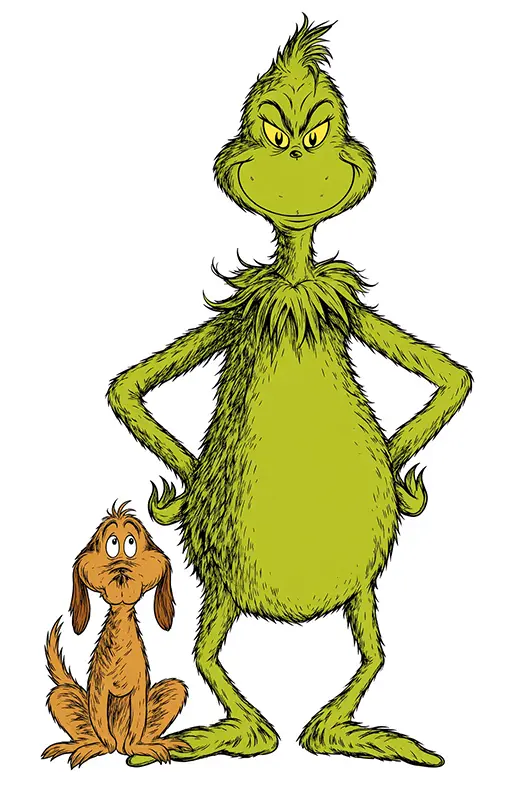
How the Grinch Stole Christmas! is a children's book written in rhyming verse and illustrated by Dr. Seuss, published by Random House in 1957. The book critiques the commercialization of Christmas and satirizes those who profit by exploiting the holiday season.
The Lorax, 1971
A small, plump, orange environmental guardian sporting a colossal yellow mustache. His short, steadfast posture gives him an imposing moral authority despite his size, making him one of the first major ecological symbols in character design.
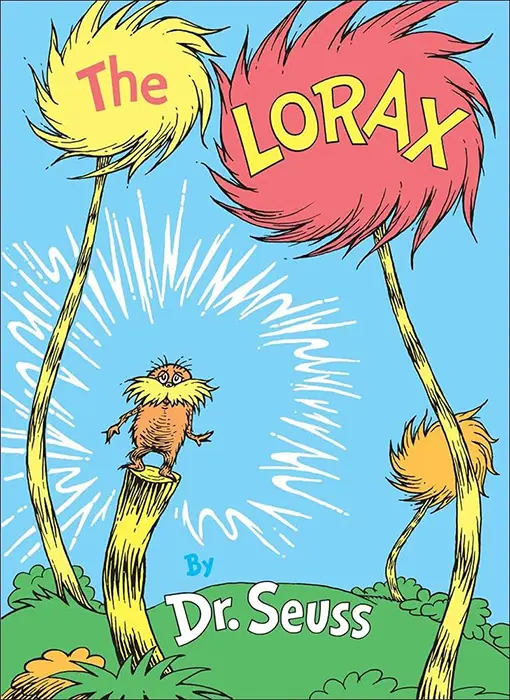
The Lorax is a children's book written by Dr. Seuss and first published in 1971. It chronicles the plight of the environment and the intervention of a creature called "The Lorax," who speaks for the trees against the greedy actions of an entrepreneur known as "The Once-ler."
Sam-I-Am and Green Eggs and Ham (Green Eggs and Ham, 1960)
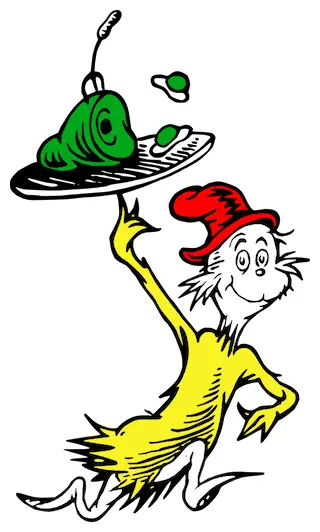
The paradigm of relentless persuasion. Sam is a short character with boundless energy who visually contrasts with his tall, grumpy, black-hatted counterpart.
The Lorax is a children's book written by Dr. Seuss and first published in 1971. It chronicles the plight of the environment and the intervention of a creature called "The Lorax," who speaks for the trees against the greedy actions of an entrepreneur known as "The Once-ler."
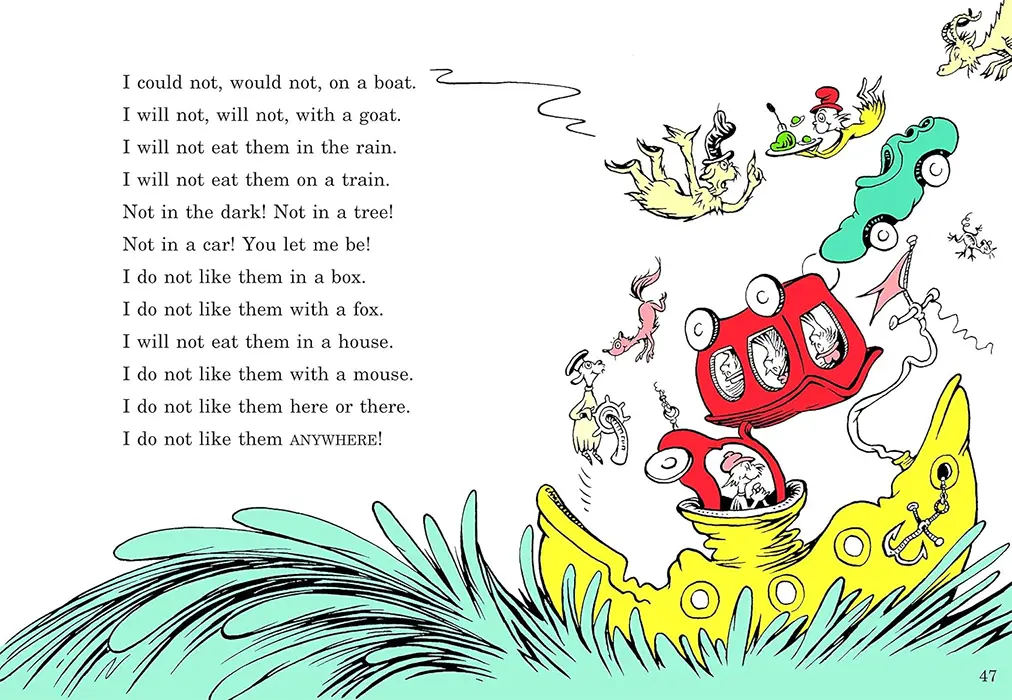
Green Eggs and Ham is a book written in very simple language for beginner readers. The book's entire vocabulary consists of just 50 distinct words. Written by Dr. Seuss, it was first published on August 12, 1960. By 2001, according to Publishers Weekly, it had become the fourth best-selling English-language children's book of all time. The story has appeared in various animated adaptations, including Dr. Seuss on the Loose (1973), starring Paul Winchell as the voice of Sam-I-Am.
Horton the Elephant
Horton the Elephant is a character from the 1940 book Horton Hatches the Egg and the 1954 book Horton Hears a Who!, both written by Dr. Seuss. The Whos would later appear in How the Grinch Stole Christmas!. Horton is a sweet, kind-hearted elephant who cares deeply about other animals and people. Horton appeared again in another Dr. Seuss book, Horton and the Kwuggerbug, released on September 9, 2014, making it the second Dr. Seuss book published posthumously after his death in 1991 (the first being Daisy-Head Mayzie in 1995).
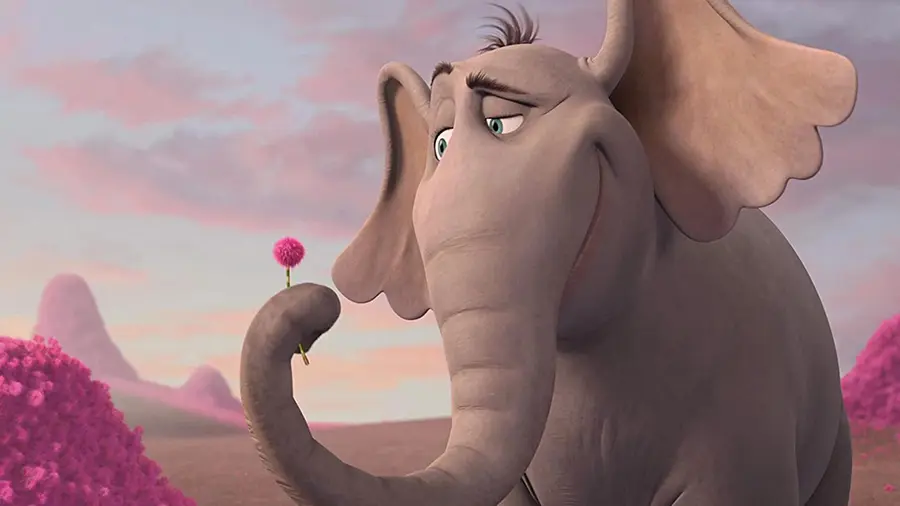
Horton the Elephant character created by Dr. Seuss. Image of Horton from the 2008 animated film Horton Hears a Who!, produced by Blue Sky Studios.
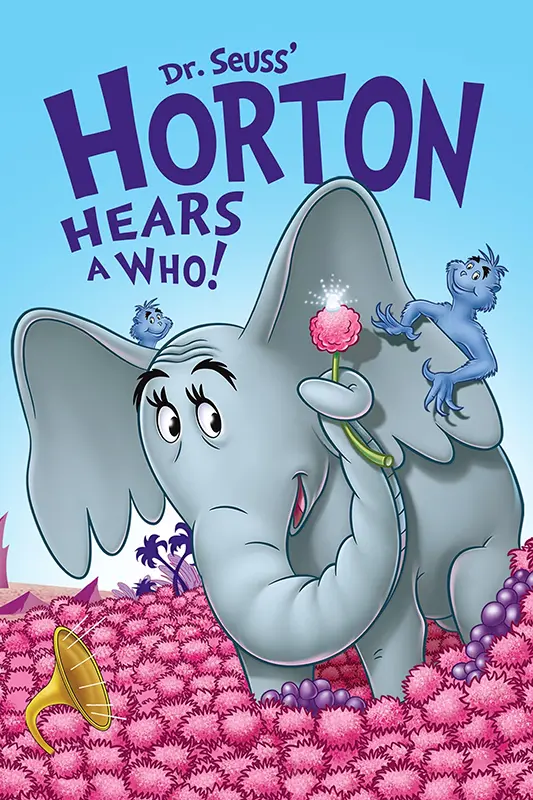
Poster for the 1970 half-hour animated short film Horton Hears a Who!, produced by MGM Animation/Visual Arts and directed by Chuck Jones.
4. Pedagogical Revolution: Vocabulary Limits, Imagination Liberates
Dr. Seuss’s impact transcended art to transform the American educational system in the mid-20th century.
In 1954, a report in Life magazine criticized school reading primers (the famous Dick and Jane books), labeling them boring and holding them responsible for children’s lack of interest in reading. A publisher challenged Geisel to write and illustrate an engaging book using a strict list of only 225 essential beginner words.
The result was The Cat in the Hat (1957). Dr. Seuss proved that with catchy rhymes, anapestic meter, and visually compelling characters, children’s reading could stop being a dry chore and become an exciting adventure. Years later, he repeated the feat with Green Eggs and Ham, using a total of just 50 distinct words.
5. Legacy and Influence on Animation and Modern Art
Dr. Seuss’s work laid the foundation for future generations of illustrators, animators, and character designers:
- Impact on Animation: Animators like Chuck Jones, Friz Freleng, and more recently studios like Illumination Entertainment (Despicable Me, The Lorax, The Grinch) have found a endless source of three-dimensional expression in Seuss’s geometry.
- Architecture and Design: The term “Seussian” has become part of the modern art lexicon to describe any architecture or visual form that is surreal, curved, colorful, and gravity-defying.
- Awards and Recognition: He won a special Pulitzer Prize in 1984 for his lifelong contribution to children’s education and literature, alongside several Academy Awards and Emmy Awards for his audiovisual productions.
Frequently Asked Questions (FAQ) about Dr. Seuss
What was Dr. Seuss’s real name?
His real name was Theodor Seuss Geisel. “Seuss” was his mother’s maiden name and was originally pronounced in German as /sɔɪs/ (“Sois“), although over time the English pronunciation /suːs/ (“Soos”) became widespread.
Was Dr. Seuss a cartoonist or a writer?
He was inextricably both. He conceived his books as a unified whole where the rhyming text and character design complemented each other seamlessly. His storytelling cannot be understood without his illustrations, nor his art without his poetic rhythm.
Why don’t his characters look like anything from real life?
Dr. Seuss believed that children’s literature should foster free curiosity. By inventing non-existent creatures, he avoided the visual biases of the real world, allowing any child, regardless of background, to identify with the universal emotions of his characters.