


Dragon Ball
Dragon Ball Anime Series: The epic saga that took the world by storm from Japan
An Introduction to the Dragon Ball Universe.
Dragon Ball is one of the most influential and beloved anime series in the history of animation. Created by Akira Toriyama, the story of Goku and his friends has transcended generations, captivating not only anime fans but global audiences alike. Since its debut in 1986, Dragon Ball has left an indelible mark with stories full of adventure, epic battles, memorable characters, and a constant exploration of the limits of human power.

🎬 Dragon Ball: Table of Contents
- An Introduction to the Dragon Ball Universe.
- VIDEO: The History of Dragon Ball, the series that changed the world of Anime forever 🌟🐉
- VIDEO: The Red Ribbon Army: The most feared organization in the original Dragon Ball
- The Origins of Dragon Ball.
- Dragon Ball Image Gallery: Free Wallpapers and Downloads
- The Main Characters of Dragon Ball.
- The Red Ribbon Army: The Ambition That Tested Goku’s Innocence
- Red Ribbon Army Image Gallery: Free Wallpapers of Goku’s First Major Enemy
- The Importance of Music in Dragon Ball
- Dragon Ball Z and the Revolution of Action Anime
- Dragon Ball GT and the Future of the Franchise
- Dragon Ball AF
- Dragon Ball Super
- Dragon Ball Daima
- Efectos especiales en Dragon Ball: La energía hecha animación
- Dragon Ball in Popular Culture and the Gaming World
- Goku’s Journey and His Legacy

If you are passionate about the world of Dragon Ball, don’t forget to explore more of this incredible franchise on our YouTube channel and in other sections of El Parque de los Dibujos. Be sure to follow us on social media to stay up to date with all our latest content! Join us on this journey through the history of Dragon Ball. And don’t forget to subscribe to our YouTube channel, which you can visit here.
Discover the history of the Red Ribbon Army, its origins, its most prominent leaders, and the most famous supervillains of the Red Ribbon organization. And don’t forget to subscribe to our YouTube channel, which you can visit here.
The Origins of Dragon Ball.
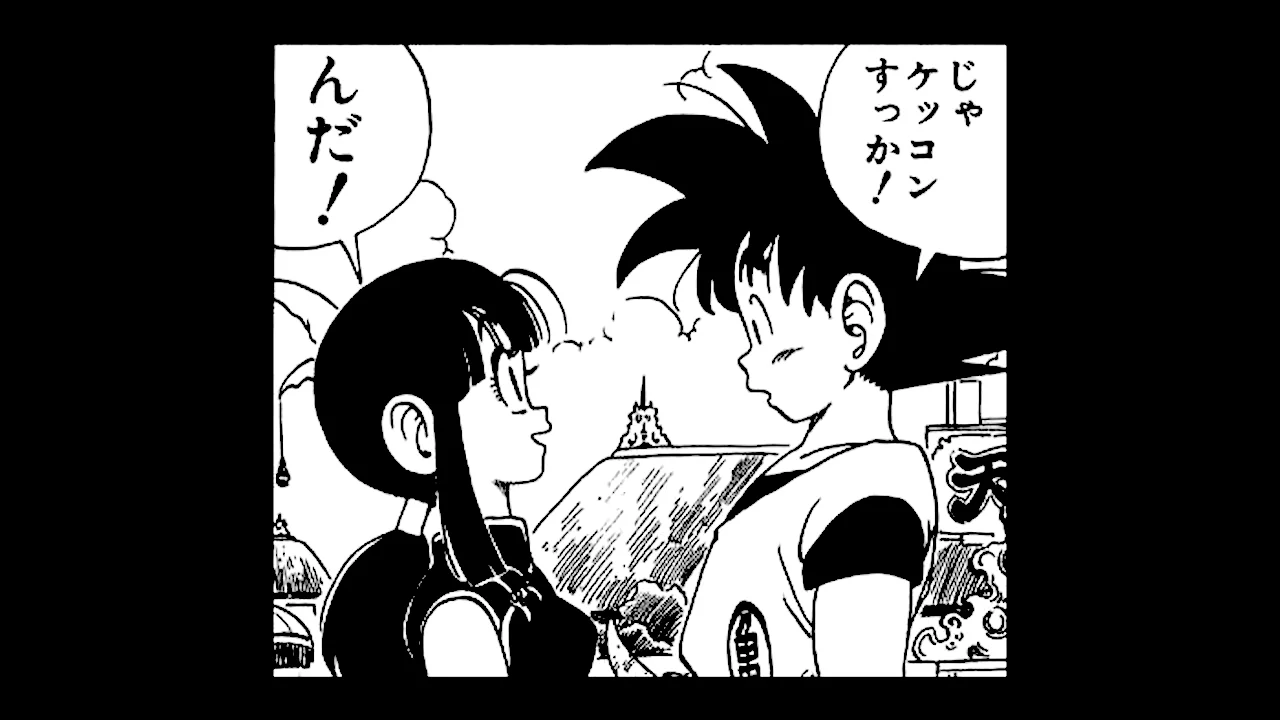
Dragon Ball began as a manga in 1984, initially inspired by the classic Chinese novel Journey to the West. Akira Toriyama, the genius behind the masterpiece, blended this tale with action, martial arts, and comedy. The manga was serialized in Weekly Shonen Jump and quickly became a massive hit, leading to the creation of the anime shortly after. In 1986, Toei Animation—one of the world’s leading animation studios—brought the story to television, launching one of the most significant franchises in entertainment history. The animated series featured groundbreaking visual effects that paved the way for many anime series to come


Japanese Dragon Ball original manga - Image 1
Japanese Dragon Ball original manga - Image 2

Japanese Dragon Ball original manga - Image 3
The Plot.
Toriyama created a story starring a young monkey-tailed warrior named Son Goku. Son Gohan, a martial arts master and disciple of Master Roshi, lived on Mount Paoz until he found Goku’s space pod. He adopted and raised the boy as his own grandson, until he met a tragic end one night during a full moon, when Goku transformed into the Great Ape (Oozaru) and crushed him.
Goku lived through unforgettable adventures alongside great friends who became his family. Among them were Bulma, the brilliant inventor who started the search for the Dragon Balls; Krillin, his training partner and inseparable friend; Yamcha, a skilled warrior with a noble heart; Oolong and Puar, who always provided humor and cunning; and, of course, the wise Master Roshi, who taught him the foundations of martial arts and the philosophy that would define his entire life.
Dragon Ball Image Gallery: Free Wallpapers and Downloads
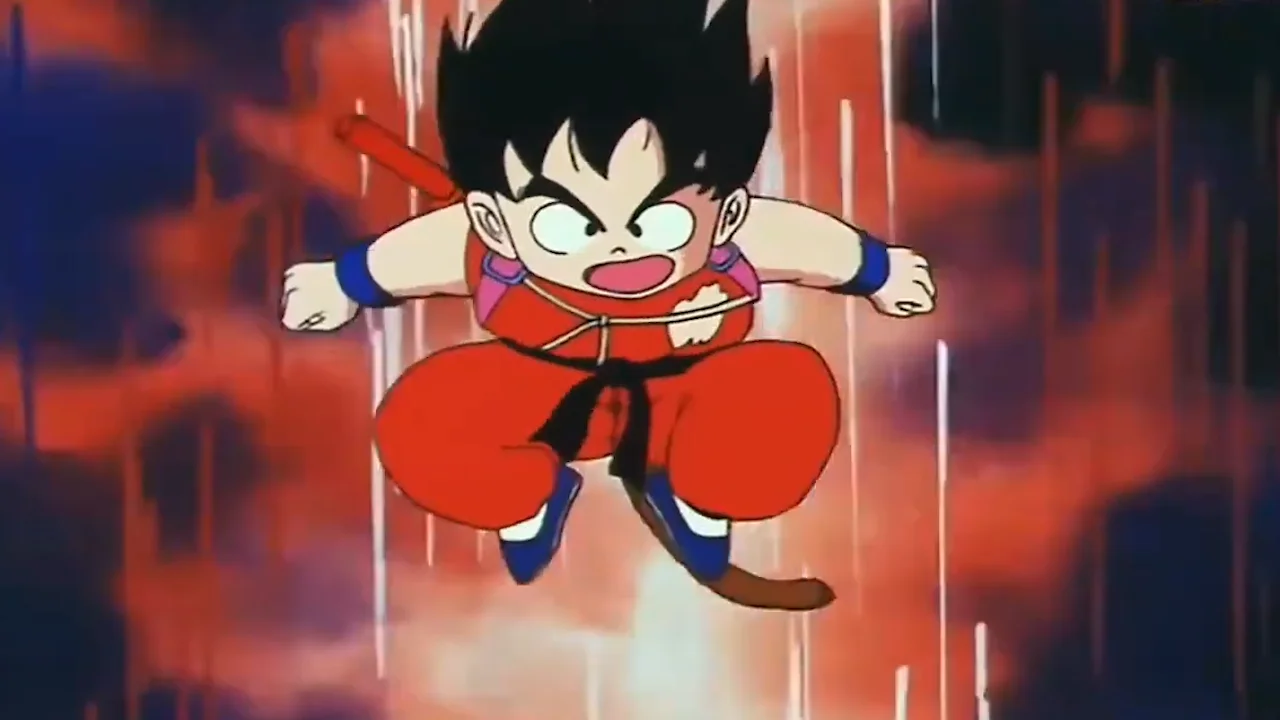
Goku as a child

Goku on his Flying Nimbus

El Dr. Gero enemigo de Goku en Dragon Ball.

Goku cries over the death of Android 8
Dragon Ball animated series logo

Goku battles the Red Ribbon Army

Super Saiyan transformation

Lord Beerus, the God of Destruction from Dragon Ball

Xenoverse antagonist from the Dragon Ball series

Goku, the main character of Dragon Ball

The main characters of Dragon Ball

Son Gokū
Dragon Ball stood out from the beginning due to the exceptional work of great artists and animators, such as Minoru Maeda, responsible for the first iconic designs, and Tadayoshi Yamamuro, whose style visually defined the later sagas.
The masterful combination of traditional hand-drawn cel animation, unique shading techniques, and visual effects gave the series an unmistakable personality that would deeply influence generations of artists.
The Main Characters of Dragon Ball.
Throughout its numerous sagas, Dragon Ball has introduced us to a vast gallery of characters. Goku, the courageous protagonist, and Vegeta, the proud Saiyan Prince, are just a few of the names that have defined generations. Alongside them, we find Bulma, Krillin, Piccolo, Gohan, and many others who brought depth and emotion to every story arc.

Cell, the bio-android antagonist from the Dragon Ball series.

Master Roshi, a character from the Dragon Ball series. Master Roshi, also known as the Turtle Hermit (Kame Sennin), was once the strongest Earthling on the planet. Many remember him as the ‘God of Martial Arts,’ but before holding that title, he studied martial arts under his master, Mutaito, alongside his lifelong rival, the Crane Hermit. Roshi is the founder of the Turtle School (Kame-Sen’ryū) and was the first mentor to both Son Goku and Krillin.

Super Shenron from Dragon Ball. Super Shenron is the divine dragon that appears when the Super Dragon Balls, created by Zalama, are gathered. These are gargantuan Dragon Balls, similar in size to a small planet, and are scattered between Universe 6 and Universe 7.

Frieza, also known as Freezer, is one of the primary villains of the Dragon Ball series, specifically within the Namek Saga. Introduced in Dragon Ball Z, Frieza is the leader of the Universe 7 Galactic Empire, renowned for his cruelty, strategic intelligence, and for being one of the most fearsome forces in the universe.

Krillin is one of Son Goku’s closest friends. Despite not being as powerful as other characters, Krillin is known for his bravery, wit, and loyalty. He has participated in numerous martial arts tournaments and battles against powerful enemies throughout the Dragon Ball series.

Piccolo is a Namekian from the Dragon Ball anime and manga. He is known for his green skin, antennae, and his ability to regenerate parts of his body. Originally, he was the reincarnation of the evil King Piccolo, but over time, he became a key ally to Goku and the Z-Fighters. He is a strategic warrior and a mentor to Gohan.
The Red Ribbon Army: The Ambition That Tested Goku’s Innocence
Founded by the diminutive and ruthless Commander Red, the Red Ribbon Army is the first major global threat in Dragon Ball. It is not just a single villain, but a massive military machine with secret bases scattered across the planet, experimental weapon labs, and a clear goal: to gather the seven Dragon Balls and conquer the world.
Red delegates the dirty work to a chain of charismatic and dangerous officers. Among them are the refined and sadistic General Blue, an expert in martial arts and telekinesis; the enigmatic Colonel Violet, who leads the infiltration units; the brutal Sergeant Metallic, a cyborg of titanic strength; and the strategist Staff Officer Black, who eventually rebels upon discovering his leader’s petty motives (Red only wants to wish… to be taller!)
The most tragic human element of the army is Dr. Gero, the scientist responsible for the bio-engineering projects. His hidden laboratory produces prototypes like the kind-hearted Android 8 (Eighter), who eventually sides with Goku. This work lays the foundation for the Androids and Cell, who would threaten the world years later in Dragon Ball Z.
The Red Ribbon arc is essential for three reasons:
-
Scale of Adventure: It takes Goku beyond the tournaments to jungles, snowy towers, and underwater bases, expanding the series’ map and introducing allies like Upa and Bora, or the thief Launch.
-
Goku’s Evolution: The naive boy learns that evil can be organized and that strength without compassion leads to tyranny. His determination to gather the Dragon Balls for altruistic purposes stands in stark contrast to the army’s greed.
-
Seeds of the Future: Dr. Gero’s ideas regarding androids, the obsession with absolute power, and genetic manipulation would return decades later. This makes the Red Ribbon Army a ‘red thread’ that connects the original series to Z, Super, and the film Dragon Ball Super: Super Hero (2022).
Defeated base by base—including the iconic Muscle Tower—the Red Ribbon Army proves that even in the face of overwhelming technology and numbers, courage and friendship can dismantle tyranny. Their fall marks the end of Goku’s childhood and the beginning of even greater dangers for the world of Dragon Ball.
Red Ribbon Army Image Gallery: Free Wallpapers of Goku’s First Major Enemy

Red Ribbon Army from Dragon Ball series

Red Ribbon Army ships

Red Ribbon Army Headquarters

Red Ribbon Army Android

Dr. Gero and Android 19, characters from the Red Ribbon Army in Dragon Ball.

The Red Ribbon Army supervillains from Dragon Ball.

Dr. Gero, the founder of the Red Ribbon Army.

Dr. Gero in the robot creation lab.

Android 19 of the Red Ribbon Army

Colonel Silver of the Red Ribbon Army

Colonel Violet of the Red Ribbon Army

The most iconic villains of Dragon Ball: Frieza

Buyon the monster of the Red Ribbon Army

Red Ribbon Army tanks
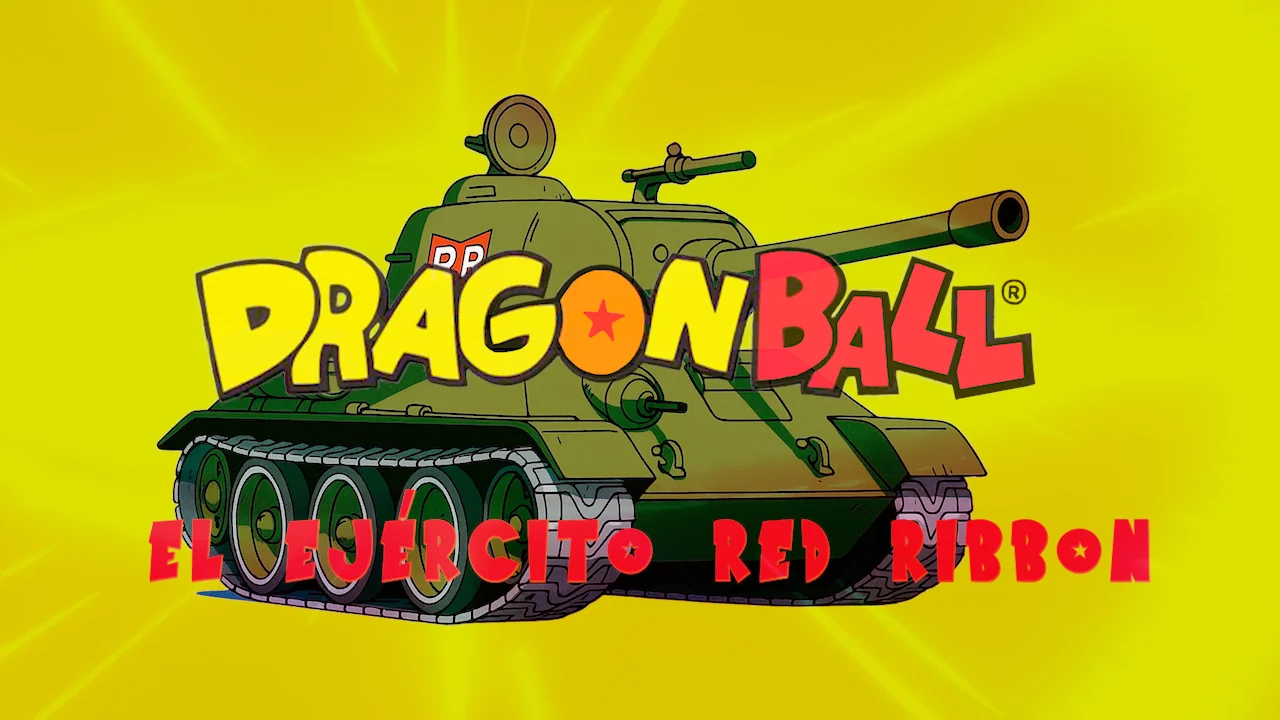
Dragon Ball Logo with Red Ribbon Army Tank
The Dragon Balls
The Dragon Balls are one of the most important and recognizable elements of Dragon Ball. Once all seven are gathered, the legendary dragon Shenron is summoned to grant a single wish.
Earth’s Dragon Balls The most well-known are the seven Dragon Balls of Earth. Orange with red stars, they were created by Earth’s guardian, Kami, and later restored by Dende.
Namekian Dragon Balls
On Namek, there are other Dragon Balls, much larger and more powerful than those on Earth. These spheres summon Porunga, a dragon capable of granting three wishes and reviving multiple people at the same time.
Super Dragon Balls
But the most powerful of all are the Super Dragon Balls, planet-sized spheres scattered across the universe. When gathered, the majestic Super Shenron appears, capable of granting literally any wish without restrictions.
Dark Dragon Balls (Black Star Dragon Balls)
There are also the Dark Dragon Balls, or Black Star Dragon Balls, which appear in Dragon Ball GT. Created by the original Nameless Namekian before he split into Kami and Piccolo, these spheres are extremely powerful yet remain some of the most enigmatic and dangerous artifacts in the universe. Once used, they scatter across the entire galaxy; if they are not recovered within one year, the planet where the wish was made will be completely destroyed.
The Dragon Balls are the engine that drives many of the adventures in the series. From reviving allies to saving entire planets, these magical spheres symbolize hope and the possibility of a fresh start.

The Dragon Balls

Goku with one of the Dragon Balls

One of the Dragon Balls

The Dark Dragon Balls

Dragon Balls glowing with energy

Energy-filled sphere
The Importance of Music in Dragon Ball
The music in Dragon Ball has been essential in creating the atmosphere for epic battles and emotional moments. The themes composed by Shunsuke Kikuchi for the original anime, and later by Norihito Sumitomo, remain industry benchmarks. Furthermore, the English versions, featuring their own unique soundtracks, also left a significant mark on fans outside of Japan. The melodies of the battles fought by Goku and his friends are truly unforgettable!
Contrary to popular belief, this series had a lighter tone, with a focus on comedy and adventure before evolving into the action-heavy style that would define its sequels.
The martial arts tournaments were a key element in the anime’s development. As the story progressed, Goku faced increasingly powerful rivals, such as Tien Shinhan and King Piccolo, laying the groundwork for what was to come.
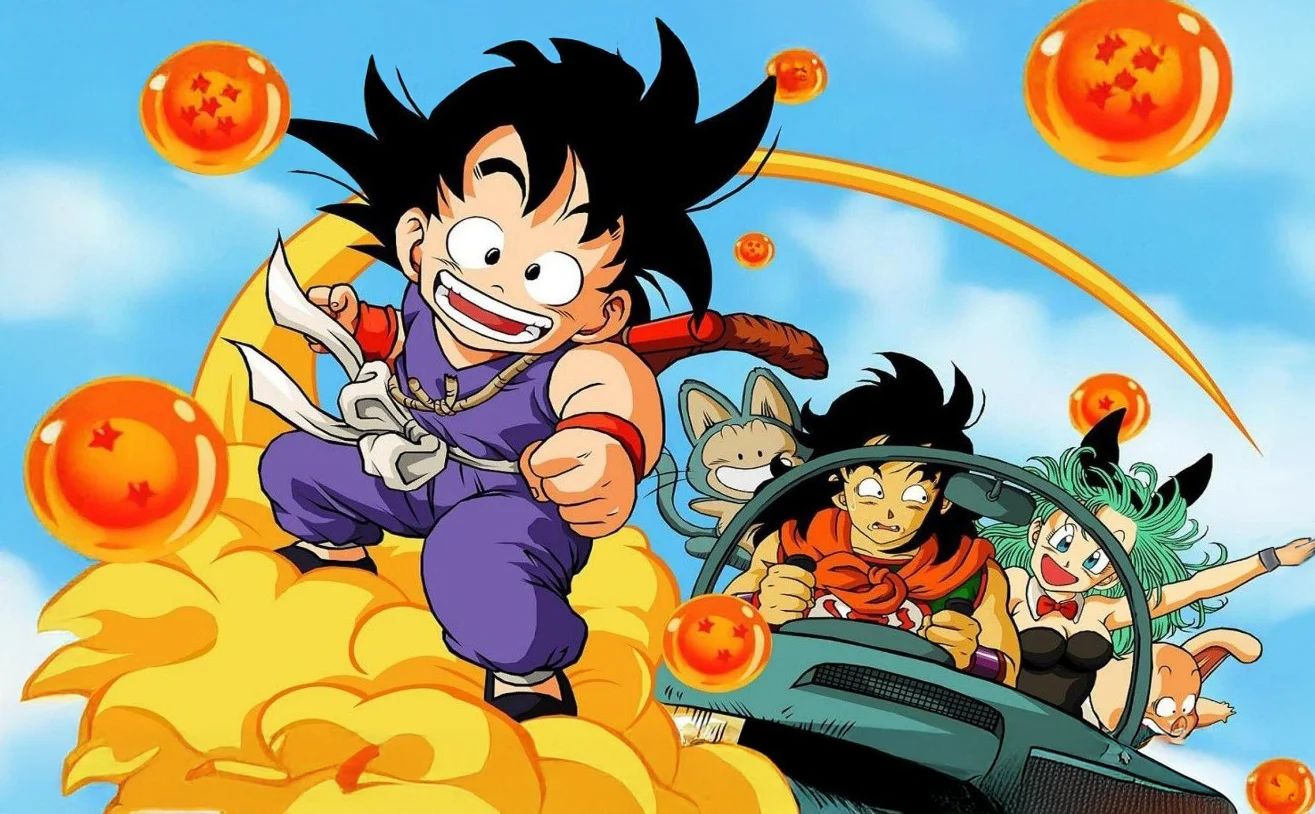
Dragon Ball, an anime series that has conquered the entire world.

Dragon Ball television series North America 1995 logo.

Kid Goku Super Saiyan
Dragon Ball Z and the Revolution of Action Anime
In 1989, Dragon Ball Z hit television screens, changing the history of anime forever. This new series adapted the second half of the manga, showing Goku as an adult facing much more serious threats. With Dragon Ball Z, the series reached new heights. The battles became more intense, and characters like Vegeta, Frieza, Cell, and Majin Buu left an indelible mark on fans. Each of them starred in epic sagas filled with fierce combat and breathtaking transformations.
The revelation of the Saiyans and transformations like the Super Saiyan were some of the defining moments that established the series and its protagonist, Goku, as a global pop culture icon.
One of the most iconic moments was Goku’s first Super Saiyan transformation during his fight against Frieza. This scene was a game-changer for animation and elevated Dragon Ball Z to legendary status.
The explosion of power, the raw emotion of the battle, and the incredible tension of that moment—when Goku finally achieves the Super Saiyan transformation—are elements etched into the memory of every Dragon Ball fan. It wasn’t just a climax in the fight against Frieza; it also signaled the dawn of a new era for the Saiyans. With his golden hair, his eyes turning a piercing green, and the wave of energy radiating from his body, Goku became the symbol of unshakeable strength.
With more dynamic animation, spectacular combat choreography, and a darker storyline, Dragon Ball Z became the definitive action anime of the ’90s.

Dragon Ball GT and the Future of the Franchise
In 1996, Dragon Ball GT attempted to continue the story without the direct involvement of Akira Toriyama. Although it introduced interesting concepts like Kid Goku and Super Saiyan 4, it failed to achieve the same impact as its predecessors.

Dragon Ball GT logo

Dragon Ball GT promo art

Dragon Ball GT episode intro
Dragon Ball AF
For years, Dragon Ball AF was one of the most famous rumors among fans. Although it never officially existed, this supposed sequel to Dragon Ball GT emerged as a community-driven phenomenon, fueled by fan art, unofficial stories, hundreds of thousands of drawings, new characters, and speculation about new transformations, such as Super Saiyan 5.
From this movement emerged mangaka like the Spanish artist David Montiel—also known as Tablos AF—Toyble (now Toyotaro), and Young Jijii. These great artists began making a name for themselves in the manga world, eventually reaching the official franchise, as in the case of Toyotaro, who became the official writer and illustrator.
Despite not being canon, Dragon Ball AF had a massive impact on pop culture, demonstrating the power of fans’ imagination and creativity. Its popularity was so vast that it inspired other artists and indirectly contributed to Toei Animation officially reviving the franchise with Dragon Ball Super, further expanding the universe created by Akira Toriyama.
Dragon Ball Super
However, Dragon Ball was not finished. In 2015, with the arrival of Dragon Ball Super, the franchise resurged with new sagas and transformations such as Super Saiyan Blue and Ultra Instinct.
Furthermore, the film Dragon Ball Super: Broly was a massive box office hit, solidifying the future of the series.

Dragon Ball Daima
In the year 2024, the franchise surprised everyone with Dragon Ball Daima, a special series released by Toei Animation to commemorate the saga’s 40th anniversary.
Created with the direct collaboration of Akira Toriyama, this new story returns to the adventurous tone of the series’ beginnings, transforming Goku and his friends back into children, forced to face unknown dangers in the Demon Realm. A nostalgic and action-packed tribute that renews the legend of Dragon Ball.
Efectos especiales en Dragon Ball: La energía hecha animación
The ‘energy’ of Dragon Ball isn’t just told—it is seen and felt thanks to the creativity of its special effects. Since its debut in 1986, Dragon Ball has made special effects (FX) an essential part of its visual identity.
Below are the most characteristic techniques that shaped Ki and Goku’s battles.
- Ki Auras: Hand-painted cel layers with ‘sawtooth’ brushstrokes overlaid on the characters. In Dragon Ball Z, airbrush sparkles and 2-frame cycle flickering were added.
Result: A sense of fluctuating power; the viewer ‘feels’ the energy surge before every transformation.
- Energy Blasts (Kamehameha, Final Flash): Overexposed white backlighting and airbrush gradations; in the ’90s, these were combined with ‘cel-shaking’ (camera shaking) and flash frames.
Result: Instant kinetic impact; the brilliance hides the transition and intensifies the power struggle.
- Speed and Kinetic Lines: Static backgrounds with parallel lines painted or created using ink rollers; these were then filmed with the character overlaid on top.
Result: An illusion of hyper-speed without the need to animate every single step—a technique inherited from Toriyama’s manga.
- Impact Frames: One or two frames where the screen goes completely white, or shows a black silhouette against a red background.
Result: The hit is ‘felt’ in the brain; the micro-second pause enhances the clash and tricks the eye.
- Planetary Explosions: Created using airbrushing, layers of painted smoke, and cut-out cel bubbles; in Dragon Ball Super, digital particles and radial blur are added.
Result: Epic scale; the destruction of Namek or the shockwave of the Hakai conveys cosmic proportions.
- Digital Compositing (Remasters and Super): Since 2013, software like After Effects has been used for glow effects, motion blur, lens flares, and 3D layers for ‘God’ and ‘Blue’ auras.
Result: Visual continuity with the classic style, but with HD sharpness and more luminous colors.
Why are these special effects so effective?
- Manga Language: The FX amplify what Toriyama drew: speed, impact, and invisible energy.
- Animation Economy: Using kinetic backgrounds and overexposure, Toei saved on cels without sacrificing spectacular visuals.
- Musical rhythm. The scores by Shunsuke Kikuchi and later Norihito Sumitomo synchronize volume swells with flashes of light: image and sound rise together to build the hype.
- Digital evolution. Modern sagas combine hand-painted 2D particles with 3D compositing, achieving fluid auras and explosions with depth while maintaining the traditional line art.

Spectacular Dragon Ball special effects

A Super Saiyan shrouded in special effects

Special effects of fire, flashes, and explosions

Super Saiyan energy special effects
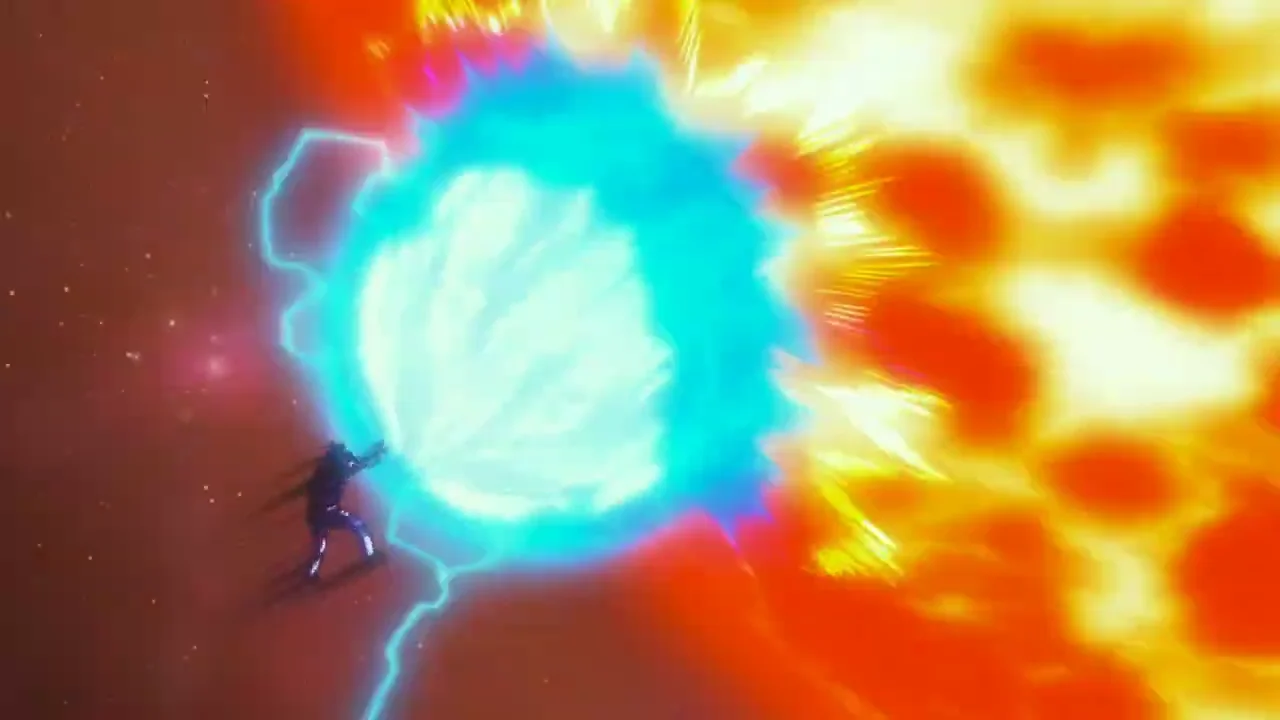
The energy in Dragon Ball isn't just told; it is seen and felt

An energy blast that destroys a planet
Ki in the context of the Dragon Ball universe.
Ki (気)—also written as ‘chi’ or ‘qi’—is a term from East Asian philosophy and martial arts that literally means ‘vital energy’ or ‘life breath.’ In Dragon Ball, Akira Toriyama adopts this concept, turning it into the source of all superhuman power.
Origin: Every living being possesses Ki; it originates from one’s inner life force.
Perception: Trained warriors can sense others’ Ki, measure its magnitude, and even hide their own (the technique of “suppressing” or “masking” one’s Ki).
Manipulation: Through concentration, breathing, and mental focus, Ki is channeled outside the body in the form of beams, spheres, or auras. A classic example: the Kamehameha.
Enhancement: Ki increases through physical and spiritual training, rage, or emotional bonds (Goku breaking his limits to protect his friends).
Transformations: Forms like Super Saiyan, God, or Ultra Instinct represent drastic leaps in Ki, manifesting as changes in aura, hair color, and overwhelming strength.
Narrative Meaning: It allows the inner growth of characters to be visualized; rather than “magic,” Ki symbolizes discipline, willpower, and self-knowledge.
In the Real World: Ki (or Chi) is used in disciplines such as Qigong, Tai Chi, or Reiki to refer to the flow of bodily energy balanced through breathing, posture, and concentration. Dragon Ball exaggerates this idea, turning it into spectacular energy attacks and cosmic transformations, yet it maintains its philosophical root: power comes from within.
Dragon Ball in Popular Culture and the Gaming World
Dragon Ball in Popular Culture and the Gaming World. The influence of Dragon Ball was not limited to manga and anime alone. Dragon Ball became a multi-billion dollar franchise with a massive presence in the world of video games, featuring titles spanning consoles from the 1980s to the present day. The legendary Budokai, Tenkaichi, Xenoverse, Dragon Ball FighterZ, and Dragon Ball Z: Kakarot series are just a few examples of the ongoing impact the series has on the gaming industry. These games have allowed millions of fans to experience the epic battles and adventures of Goku and his friends firsthand, expanding the Dragon Ball phenomenon across global entertainment culture.

Goku’s Journey and His Legacy
Over the years, Dragon Ball has influenced not only the world of animation but also cinema, music, and other art forms. Goku and the Super Saiyans have become globally recognized cultural symbols. The legacy of Dragon Ball remains an integral part of global popular culture.
Dragon Ball is more than just a story of battles and transformations; it is an epic journey about personal growth, the value of friendship, and sacrifice. Across generations, the saga remains relevant, connecting with new fans and maintaining its status as an animation icon. The series featuring Goku and his friends will remain a pillar of global entertainment for many years to come.
After more than 40 years, Dragon Ball continues to be one of the most beloved and popular franchises in the world. Its influence on anime and pop culture is undeniable.
Through its striking animation, epic music, memorable fights, and iconic character development, Dragon Ball has inspired countless creators and continues to win over new fans in every generation.
What is your favorite Dragon Ball saga? And who is your favorite character?
Don’t forget to subscribe to our YouTube channel for more episodes on the history of animation!